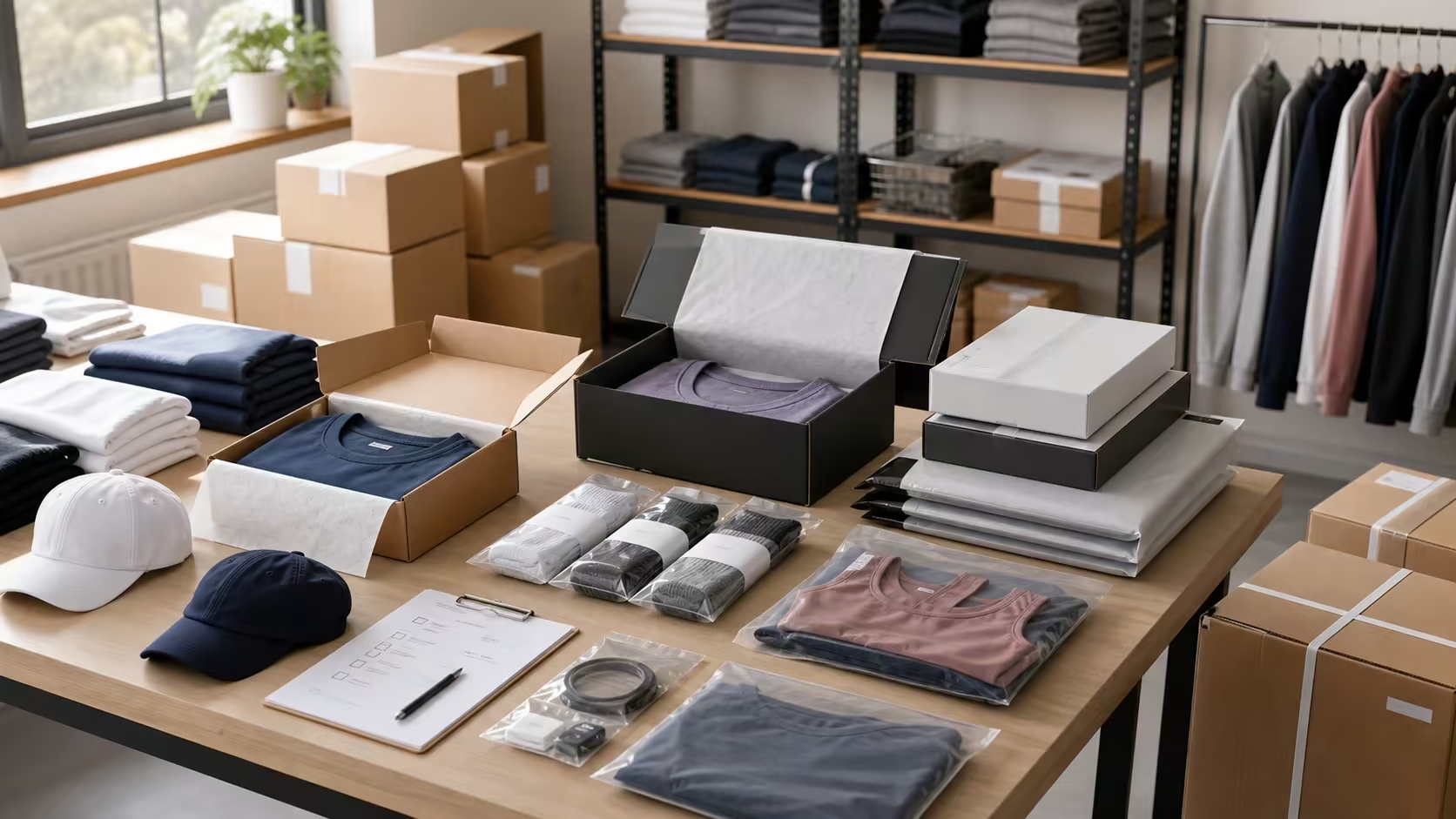
EU clothing textile label planning with fibre composition language versions component mapping online copy and physical approval records

EU apparel label planning

EU Clothing Textile Label Requirements: Fibre Content and Languages

Build one destination-market matrix for fibre names, percentages, garment components, official-language versions, animal-origin wording, ecommerce display, physical labels, and release evidence.

Direct answer

Do EU clothing fibre labels need each destination country's language?

Yes, unless the destination Member State provides otherwise. Article 16 of Regulation (EU) No 1007/2011 requires the fibre-composition description in the official language or languages of the Member State where the textile product is made available to consumers. The composition must also be clearly visible before an online purchase.

Do not translate a finished label at the last minute. First lock the countries, sellable products, component map, authorised fibre names, weight percentages, animal-origin statement where relevant, and ecommerce copy. Then obtain country-specific review for care, size, origin, safety, traceability, environmental, retailer, and other information that Regulation 1007/2011 does not fully harmonise. This article is a planning aid, not legal advice or a declaration of compliance.

EU baseline

Close six textile-label decisions before artwork

Clothing and other products made of at least 80% textile fibres by weight are generally within the Regulation's textile scope. Exceptions and special product rules still require product-specific review.

DecisionEU baseline to verifyEvidence to retainCommon handoff failure
Fibre names and percentagesUse only fibre names listed in Annex I and state all constituent fibres by percentage of total weight in descending order, subject to the Regulation's defined exceptions.Material and component specifications, composition evidence, Annex I name check, reviewer decision, and released copy.Using a trademark, supplier shorthand, or marketing term in place of the authorised fibre name.
Pure-fibre wordingUse “100%”, “pure”, or “all” only when the textile product meets the Regulation's single-fibre conditions.Composition basis, treatment of permitted extraneous fibres, approved wording, and product scope.Rounding a blend to 100% or copying pure-fibre wording across a changed material.
Garment componentsIdentify textile components with different compositions. The Regulation provides a limited exemption for certain components that are not main linings and represent less than 30% of total product weight.Component map, weight basis, main-lining decision, exception rationale, and approved component labels.Combining shell, lining, gusset, or another material into one unsupported percentage statement.
Animal-origin partsWhen present, use the required statement that the product contains non-textile parts of animal origin.Bill of materials, trim declaration, supplier evidence, translated statement, and physical proof.Assuming a small leather, horn, shell, or other animal-origin part can be omitted without review.
Language marketProvide the composition description in the official language or languages required where the product is made available to consumers, unless that Member State provides otherwise.Country list, language matrix, controlled translations, local review, artwork revision, and SKU mapping.Using one English-only label for every EU destination or treating an EU-wide store as one language market.
Physical and online displayKeep the physical label durable, legible, visible, accessible, and securely attached; show the fibre composition clearly before ecommerce purchase.Label specification, physical sample, legibility review, product-page capture, channel mapping, and approval.Publishing translated composition only after checkout or hiding it inside an image, accordion, or file that the buyer may not see.

Scope boundary

Do not turn a textile-composition rule into a universal EU label template

Regulation 1007/2011 harmonises fibre names and related composition labelling. Other information can follow different EU, national, product, channel, or customer rules.

Care instructions

The EU textile Regulation does not itself create one harmonised mandatory care-label system. European Commission guidance notes that some Member States can make care labelling compulsory. Check each destination and release care wording from current product evidence.

Country of origin

Do not import the U.S. origin-label checklist into an EU file or assume the textile Regulation settles origin marking. Customs origin, consumer claims, national rules, customer requirements, and product presentation need their own current review.

Safety and traceability

The General Product Safety Regulation is a separate track. It can require product identification, manufacturer or importer contact information, an EU responsible economic operator, safety documentation, warnings, and distance-sale information as applicable.

Claims and restricted substances

Recycled, organic, antimicrobial, UV, protective, sustainability, chemical, and other claims are not proven by a fibre label. Map each claim and market requirement to its own current evidence and qualified owner.

Eight-step workflow

Build the label from market and product records

One controlled matrix is more reliable than asking a supplier to copy a competitor label.

  1. 1

    Freeze the destination list

    Record every EU country, sales channel, launch date, importer, fulfilment route, retailer, marketplace, and responsible reviewer. A new destination can create a new language or national-rule review.

  2. 2

    Identify each sellable textile product

    Map style, set, separate-sale item, shell, main lining, secondary lining, gusset, pocket bag, elastic, trim, and any non-textile animal-origin part. Keep size and color variants tied to the same verified construction.

  3. 3

    Approve the composition basis

    Confirm each component's actual fibre content and percentage-by-weight basis using supplier documents, qualified testing where needed, and change control. Do not infer finished-product composition from a marketing fabric name.

  4. 4

    Map authorised fibre names

    Compare the intended wording with Annex I in the current Regulation. Keep brand names, material platforms, and product claims separate from the regulated composition description.

  5. 5

    Resolve component and exception decisions

    State which components are labelled separately, which defined exception is relied on, who approved the interpretation, and what evidence supports it. Do not silently omit a lining or trim because the label is crowded.

  6. 6

    Create and review the language matrix

    Translate the controlled source copy for each destination's official language or languages, preserve the regulated meaning, and record the reviewer, version, date, and approved market scope.

  7. 7

    Synchronise labels and ecommerce

    Release the sewn or otherwise securely attached label, product page, catalog, marketplace fields, packaging, and any separate traceability or safety information from the same product-market record.

  8. 8

    Approve a physical proof and retain the release

    Check wording, order, separation, legibility, attachment, durability, placement, correct SKU, online visibility, and packing. Hold production when a fibre, component, language, or destination decision remains open.

Version control

Separate the source record from every market label version

A translation is not the source of truth. The source record should explain why each label version exists and which product it covers.

RecordMinimum controlled fieldsReopen when
Product composition masterStyle, component, material code, supplier, lot or revision, fibre names, percentages, weight basis, evidence, reviewer, approval date.Material, supplier, component, finish, construction, or composition evidence changes.
Market-language matrixDestination, official language set, approved regulated terms, animal-origin statement, translator or reviewer, version, effective date.A market, language, rule interpretation, regulated fibre name, or source sentence changes.
Artwork and SKU mapLabel ID, file, revision, dimensions, material, print or weave method, style, color, size, market, pack, and superseded-file status.The physical label, mapped SKU, placement, attachment, destination, or production route changes.
Online offer recordProduct URL or listing ID, displayed composition, component wording, language, visibility before purchase, screenshot, owner, and review date.The listing, translation, product construction, channel, destination availability, or checkout journey changes.
Separate compliance tracksCare, size, origin, GPSR identity and traceability, warnings, claims, chemicals, customer policies, evidence owner, and open issues.Any product, market, claim, regulation, retailer, importer, responsible operator, or evidence basis changes.

Free worksheet

Download the EU clothing textile label checklist

The CSV connects destination, official languages, product and component identity, authorised fibre names, percentages, animal-origin wording, exception decisions, physical label artwork, ecommerce display, GPSR handoff, evidence, approvals, and release status.

  • Delete the instructions and illustrative row before live use.
  • Create a new row when the product, component, composition, material, destination, language, wording, label file, online listing, or compliance owner changes.
  • Use the current regulation and destination-country requirements; do not treat an old competitor label as evidence.
  • The worksheet does not determine legal scope, translate regulated terms, verify fibre content, test durability, appoint an EU economic operator, or certify compliance.

Sources and method

Reddit identifies the language question; EU sources control the answer

A March 2026 clothing-startup discussion, revisited in September, asks whether fibre names must be translated for every intended EU market. The discussion establishes current buyer language only; its replies are not treated as legal evidence.

The factual baseline comes from the European Commission's Textile Label guide, checked July 13, 2026, and the in-force Regulation (EU) No 1007/2011, especially Articles 5, 7, 9, 11, 12, 14, 15, and 16. The Commission's textile-labelling FAQ explains that care labelling can be required by some Member States, while the EU's General Product Safety Regulation summary identifies separate safety, traceability, EU economic-operator, and distance-sale duties.

Intent boundary

Use the EU and U.S. label articles for different legal markets

This article owns EU fibre-composition, component, language, animal-origin, physical-label, and pre-purchase display planning. The U.S. article owns the FTC framework for fibre, origin, responsible-business identity or RN, and care labels. The packaging resource owns the complete operational handoff.

FAQ

EU clothing textile label questions

Must an EU clothing label list every fibre and percentage?

Regulation 1007/2011 generally requires the name and percentage by weight of all constituent fibres in descending order, subject to its defined rules and exceptions. Use authorised Annex I fibre names and obtain product-specific review before relying on an exception.

Can an English-only fibre label be sold across the EU?

Not as a blanket rule. Article 16 requires the composition description in the official language or languages of the Member State where the product is made available to consumers, unless that Member State provides otherwise. Build the language matrix from actual destination countries.

Does fibre composition need to appear on an ecommerce product page?

Yes. Article 16 requires the composition information to be clearly visible before purchase, including electronic purchases. Keep the online wording aligned with the physical label and the product's current component record.

Are care symbols mandatory everywhere in the EU?

The textile-fibre Regulation does not create one harmonised EU care-label requirement. European Commission guidance notes that some Member States can require care labelling. Verify destination-country rules and support the released care instruction with current product evidence.

Does an EU textile label satisfy all clothing compliance duties?

No. Fibre labelling is one workstream. Product safety, traceability, EU economic-operator details, warnings, chemicals, claims, origin, care, sizing, packaging, marketplace, retailer, and national requirements can need separate review and evidence.

Prepare the EU label handoff

Send the destination matrix and approved product records before sampling.

Include markets, languages, product and component composition, animal-origin parts, label artwork, online copy, separate safety and traceability fields, packaging, evidence, and open decisions.