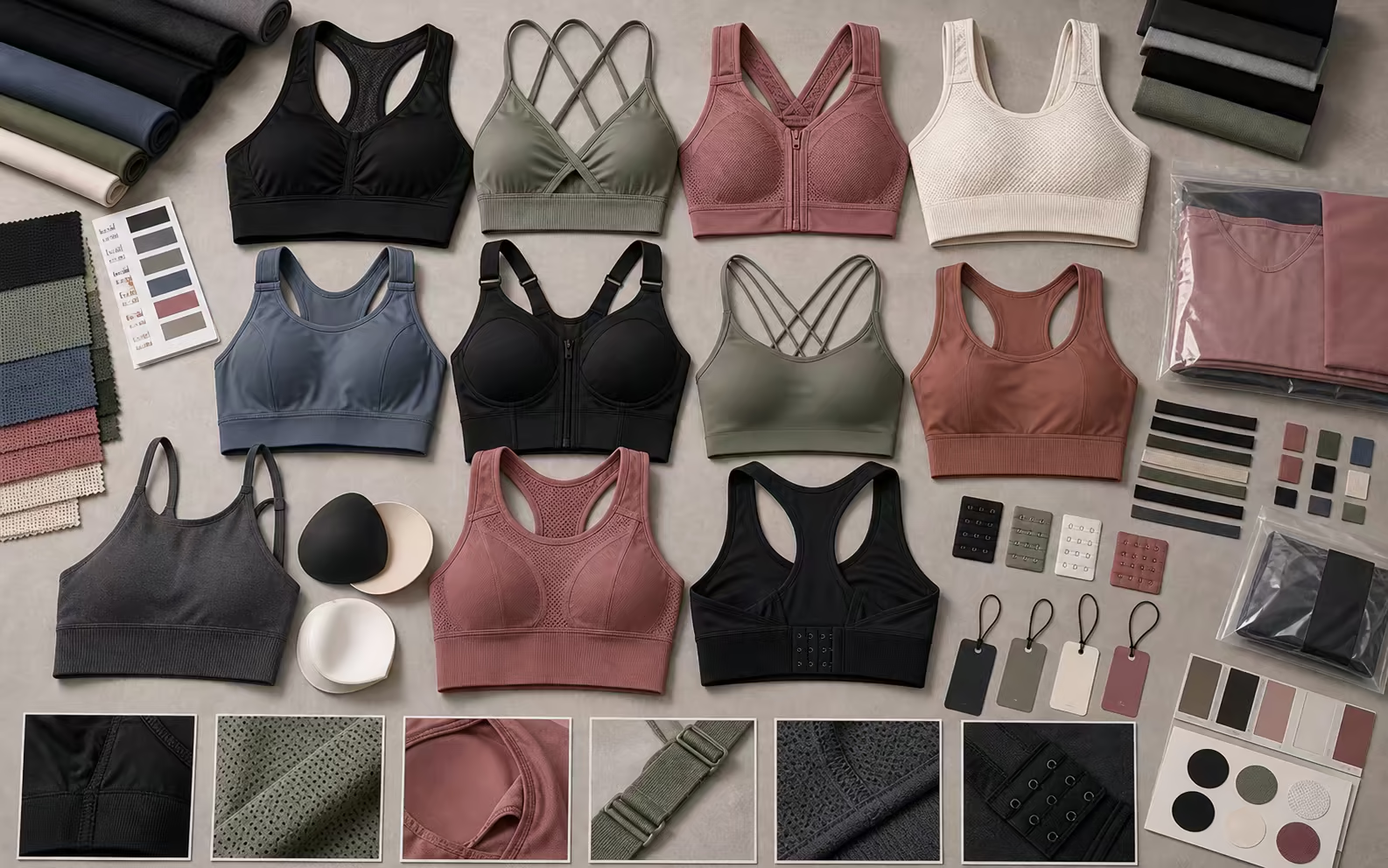
Sports bra sample validation
How to Test Sports Bra Fit, Support, Coverage, and Strap Comfort
Do not approve a sports bra from a size label or standing mirror check. Test the actual band, front or cup architecture, straps, edges, closure, materials, activity, duration, and wearer proportions together.
Direct answer
No size architecture or fabric can guarantee support and comfort for every wearer
A useful sports-bra wear test evaluates the exact sample on representative wearer proportions during the intended activity and duration. Record underband movement and pressure, front or cup containment, coverage, strap stability, edge contact, adjustment, heat, moisture, and post-wash recovery.
Release rule: approve only the tested configuration and defined wearer scope. An alpha-size sample that feels secure on one person during yoga does not prove fit or support for a fuller-bust wearer during repeated running or jumping.
Sizing architecture
Start with the fit problem the range must solve
S, M, and L can be commercially simple, but one torso size can contain different underbust and bust proportions. More size choice helps only when the pattern, grade, labels, stock plan, and fit evidence support it.
| Route | Useful when | Test focus | Unresolved risk |
|---|---|---|---|
| Alpha sizing | A simpler range fits the intended product, support level, price, and inventory plan. | Underband-to-front proportion, coverage, compression, armhole, strap length, and range-end sizes. | Sizing up for front coverage can leave the underband loose; sizing down for the band can reduce coverage or increase pressure. |
| Band and cup sizing | The product needs more separation between torso and bust volume. | Size definitions, pattern differences, wire or frame if used, neckline, side support, strap, closure, and grade transitions. | More labels do not guarantee better fit without a verified size chart, patterns, samples, and customer guidance. |
| Adjustable or hybrid sizing | Closures, strap adjustment, cup groupings, or other features are intended to extend fit flexibility. | Adjustment range, hardware position, slippage, edge pressure, access, stability, and wear after washing. | Adjustment can move pressure or create bulk; the claimed range may exceed what the garment actually accommodates. |
| Compression front | The brief prioritizes a close, simplified construction for a named activity and wearer group. | Front and side containment, underband, breathing comfort reported by wearers, heat, moisture, and movement. | More pressure is not the same as better support and can create discomfort, spill, rolling, or limited tolerance. |
| Shaped or encapsulating front | The brief requires more defined shaping or separation. | Cup or panel position, seam, liner, pad, frame, coverage, movement, size transition, and wash behavior. | Shape can mismatch wearer proportions; pads or liners can fold, shift, show through, or retain moisture. |
Eight-part wear test
Make the activity, wearer, and sample traceable
“Supportive” is not a complete test method. Record the conditions that created the result so the next sample or bulk check can repeat it.
Lock the sample identity
Record style, sample ID, revision, size, pattern or measurement version, fabric, elastic, lining, pad, hardware, construction, and care route.
Define the size route and wearer scope
State how the wearer selected the size, which body measurements or fit information were used, and which proportions the size range still needs to represent. Do not invent a universal alpha-to-cup conversion.
Record the starting fit
Review underband level and tension, front or cup placement, neckline, center front, side and underarm coverage, strap position, back, closures, labels, and edges before movement.
Run the intended movement sequence
Match the product brief: for example walking, yoga, strength work, court drills, repeated jumps, or running. Define duration, repetitions, other layers, and carried items rather than calling every test “high impact.”
Observe movement and adjustment
Record underband shift, front or cup movement, strap slip, edge roll, gaping, spill, bounce observed in the defined test, and every time the wearer adjusts the garment.
Map pressure, rubbing, heat, and moisture
Name the body and garment locations, when the response starts, whether hardware or seams are involved, and whether the sample changes after becoming wet. Keep wearer-reported comfort separate from medical claims.
Wash and retest
Check measurements, elastic recovery, strap adjusters, hooks, bonded areas, seams, pads, liners, color, surface, print, and labels after the proposed care cycle, then repeat relevant fit and movement checks.
Test representative risk sizes
Include range ends, fuller-bust or different torso-to-bust proportions, and sizes near pattern or construction transitions. Record why the selected matrix is sufficient and what result triggers another sample.
Complaint to evidence
Translate wearer language into a product decision
| Wearer feedback | Variables to inspect | Evidence to record |
|---|---|---|
| “The band is loose when the front fits.” | Size architecture, underband length and elastic, front volume, side panel, closure, grade, and wearer measurements. | Starting measurements, hook position if present, band displacement during movement, coverage, pressure, and results in adjacent or alternative sizes. |
| “It feels supportive but suffocating.” | Overall size, compression, underband, neckline, front and side coverage, layers, fabric, elastic, and activity. | Wearer-reported location and timing, movement result, adjustment, heat, moisture, test duration, and comparison sample. Escalate health concerns to an appropriate professional. |
| “The straps dig in or slide.” | Strap width, length, angle, stretch, hardware, adjustment range, back shape, underband stability, and front load. | Starting and ending settings, slippage, pressure location, visible garment position, movement, and post-wash hardware behavior. |
| “I spill at the side or neckline.” | Size route, front or cup shape, neckline, side height, armhole, liner, stretch, elastic, and pattern balance. | Coverage in defined positions, movement, gaping elsewhere, wearer proportions, privacy-controlled photos, and corrected sample result. |
| “The pads fold or move.” | Pad shape and size, pocket opening, liner, seam, adhesive or bonding if used, wash route, and wearer handling. | Pad position before and after movement and wash, folding, rotation, removal and reinsertion steps, drying, and surface appearance. |
Free worksheet
Download the sports bra fit and wear-test checklist
The CSV records sample and size architecture, wearer code, fit route, activity, duration, underband, coverage, straps, front or cup behavior, pads, movement, contact, heat, moisture, wash, representative sizes, evidence, issues, and release status.
- Delete the illustrative row and define acceptance rules for the exact product.
- Use wearer codes and protect personal measurements and images.
- Keep the limitation visible: evidence belongs to the recorded sample, wearer scope, activity, duration, and care cycle.
Related controls
Connect wearer evidence to specifications and bulk control
FAQ
Sports bra fit and wear-test questions
Is S, M, and L sizing suitable for sports bras?
It can suit a defined product and customer range, but test torso-to-bust proportions and range-end sizes. If wearers must size up for front coverage and then lose underband stability, the architecture, pattern, grade, or adjustment route may need to change.
How should a brand test sports bra support?
Define the wearer scope, size route, sample, intended activity, movement sequence, duration, and conditions. Record underband, front or cup movement, straps, coverage, adjustment, pressure, heat, moisture, and wearer response. State what the result does and does not prove.
Does a tighter sports bra provide more support?
Not automatically. Extra pressure can change movement but can also cause discomfort, spill, rolling, digging, limited wear tolerance, or a wrong size choice. Compare fit architecture and the complete garment during its intended use.
Should every sports bra size be wear tested?
Use a documented risk-based matrix. Include the base size, range ends, fuller-bust or different torso-to-bust proportions, and sizes near pattern, grade, closure, or construction transitions. Add another test when a change creates a new unverified condition.
Can a brand claim a sports bra is high support?
Use support wording only within applicable market rules and the evidence actually held. Define the tested product, wearer scope, size route, activity, duration, method, result, and limitations; avoid implying a universal result.
Developing a sports bra?
Send the target wearer, activity, size architecture, construction, and evidence plan.
Include reference products, target measurements or chart, fabric and elastic direction, coverage, straps, closures, pads, artwork, quantity, market, packaging, and the fit problem the sample must resolve.