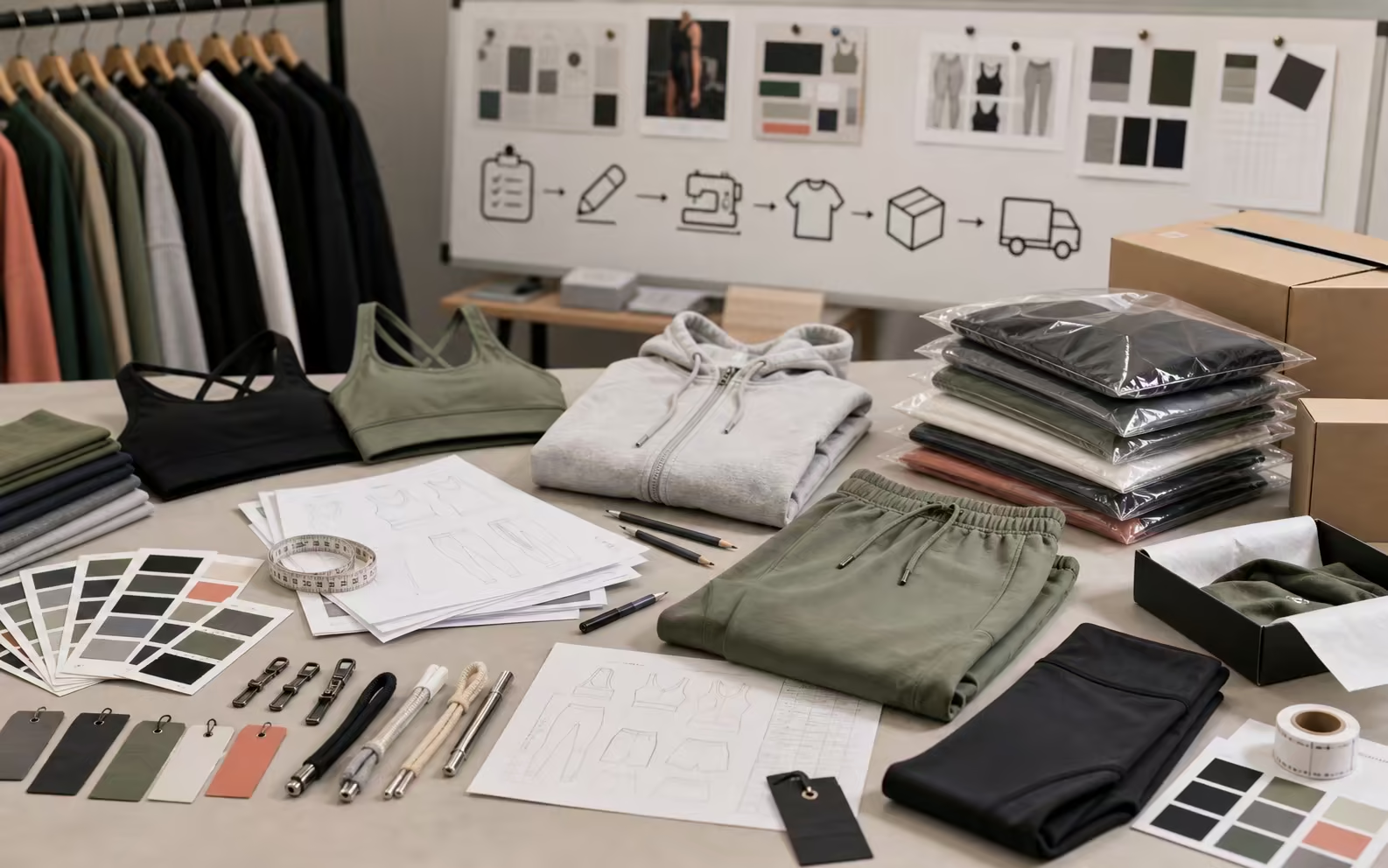
Sample planning and approval
How Many Clothing Sample Rounds Do You Need Before Bulk Production?
Use the number of samples your unresolved decisions require—not a universal count. Each round should close named questions about fit, material, construction, branding, sizing, packaging, or production readiness.
Direct answer
There is no responsible fixed number of clothing sample rounds
A light-custom order based on an already approved garment may need one production-intent confirmation sample. A modified existing style commonly needs a development or fit revision followed by a pre-production confirmation. A new performance style may require several fit and construction revisions, representative size checks, and a production-intent sample before bulk release.
The release rule: start bulk only when the latest physical sample and the latest controlled files agree, every critical requirement has evidence, and any accepted deviation is written and approved.
Planning range
Match the sample route to the amount of product change
These are planning routes, not guaranteed counts. A failed test, changed fabric, revised pattern, new artwork, or unresolved size problem can add another round.
| Development route | Reasonable planning assumption | Main proof needed | What can add a round |
|---|---|---|---|
| Existing style with logo or labels | One branded production-intent sample may be enough when the base garment, fabric, fit, and size chart are already accepted. | Logo method and placement, label data, color, packaging, and workmanship. | Changed decoration, label discomfort, color mismatch, or packaging errors. |
| Existing pattern with material or fit changes | Plan a development or fit sample plus a pre-production confirmation after corrections. | Material behavior, measurements, movement, construction, and revised branding. | Fabric changes, pattern correction, artwork revision, or failed wear review. |
| New custom activewear style | Plan multiple development and fit checkpoints, then confirm representative sizes and production intent. | Pattern, stretch, recovery, opacity, support, seams, motion fit, grade rules, and color-by-fabric behavior. | Coverage, waistband, support, seam, fabric, size-set, print, or wash issues. |
| Teamwear with variable names and numbers | Approve the garment and print method, then separately approve roster artwork and a production data proof. | Fit, colors, sponsor marks, number legibility, roster accuracy, packing, and reorder identification. | Late roster edits, inconsistent artwork scale, missing size data, or packing changes. |
| Regulated, safety-sensitive, or claim-led product | Build the route around the required test and compliance evidence, not only physical appearance. | Applicable labels, reports, performance evidence, approved materials, and traceable release records. | Failed testing, scope mismatch, material substitution, or market-specific requirements. |
Five sample gates
Give each sample round one named job
Different factories may use different sample names. Define the purpose, inputs, acceptance questions, and release authority so the label cannot hide an incomplete review.
Development or prototype sample
Tests whether the concept can become the intended product. Review silhouette, construction route, material direction, key details, and missing information. It is normal for this sample to contain substitutions, but every substitution must be disclosed.
Fit sample
Tests measurements, balance, ease, coverage, mobility, pressure, support, length, and garment behavior on a named wearer or fit form. Record actual measurements and movement notes; do not approve from photographs alone.
Size-set sample
Checks whether approved base-size intent survives grading. Select representative sizes based on product risk, size range, and customer proportions. A base size that fits well does not prove the smallest, largest, petite, tall, youth, or plus-size result.
Pre-production sample
Should represent the production-intent material, pattern, construction, color, branding, labels, and relevant packaging. If anything differs from planned bulk, list the difference and decide whether another confirmation is required.
Packed or shipment-reference sample
Confirms folding, polybag or box, label text, barcode, SKU sticker, inserts, carton marks, assortment, and presentation. This gate matters when the order must arrive retail-ready or be sorted by player, store, channel, or destination.
Revision control
Count open decisions, not courier packages
One shipment can contain several sample purposes, and one named round can still be incomplete. The approval record should show what changed and whether the newest evidence closes the issue.
| Record | Weak handoff | Controlled handoff |
|---|---|---|
| Sample identity | Second sample | Style, color, size, sample stage, sample ID, physical label, revision, and received date. |
| Fit comment | Make the waist tighter | Named point of measure, sample value, required value, tolerance, pattern impact, wearer, and approval result. |
| Material comment | Use the better fabric | Fabric code, supplier or swatch reference, composition, construction, weight, color, finish, behavior, and approved evidence. |
| Artwork comment | Logo is almost right | Artwork filename and revision, method, substrate, finished size, placement coordinates, color reference, and physical result. |
| Decision | Looks good, proceed | Approved or held by named authority, on a date, against listed files and physical sample, with deviations and open items stated. |
Downloadable control file
Use one register from first sample through bulk release
The free CSV records sample stage, IDs, file revisions, material and color references, measurement, fit, construction, branding, labels, packaging, evidence, open issues, owners, decisions, and controlled bulk reference.
- Duplicate a row when one sample has multiple issues or reviewers.
- Keep the physical sample label and digital record on the same ID.
- Use hold when a critical answer or file is missing; silence is not approval.
Bulk release test
Seven questions to answer before approving production
A final sample is useful only when it can be connected to the files and conditions the production team will actually use.
Is the sample traceable?
Confirm style, color, size, stage, sample ID, revision, date, and the person who reviewed it.
Do all product files agree?
Match the tech pack, bill of materials, pattern, measurement chart, artwork, label, packaging, purchase order, and active revision list.
Are the materials production-intent?
Identify substitutions and confirm which exact fabric, trim, elastic, pad, zipper, thread, print input, and color reference bulk will use.
Did the product pass its actual use checks?
Review fit, movement, coverage, support, pocket retention, seam comfort, wash behavior, decoration, or sport-specific checks defined for the style.
Does the size evidence match the planned range?
Close grading and representative size questions before producing the complete quantity split.
Are labels and packing approved?
Check legal and care text, brand labels, barcodes, folding, individual packs, SKU stickers, carton assortment, and destination marks.
Are open deviations written?
Name the issue, impact, owner, due date, evidence needed, and person authorized to accept or reject it.
Related controls
Connect sampling to specification, quality, and packing
FAQ
Clothing sample round questions
Can one clothing sample be enough before bulk production?
It can be enough for a low-risk light-custom order when the base garment, material, fit, sizing, construction, and production route are already approved. The branded sample must still confirm the actual artwork, labels, color, workmanship, and relevant packaging.
How many samples should a new custom activewear style need?
Do not buy a fixed count. Plan for development and fit revisions, representative size evidence, and a production-intent sample. Add another round whenever a changed fabric, pattern, construction, color, artwork, or test result creates a new unverified condition.
What is the difference between a fit sample and a pre-production sample?
A fit sample proves measurements, balance, mobility, coverage, pressure, and wearer response. A pre-production sample should also represent the material, color, construction, branding, labels, and other inputs planned for bulk.
Can bulk fabric be ordered before the final sample is approved?
Some long-lead inputs may need earlier commercial commitment, but the risk, specification, color approval, quantity, cancellation exposure, and effect of later sample changes should be documented. Ordering material early is not the same as releasing garment production.
Should every size be sampled?
Not automatically. Select representative sizes based on the range, product risk, customer proportions, grade changes, support or coverage needs, and prior evidence. Record why the selected sizes are sufficient and what would trigger another check.
Ready to plan a sample?
Send the current style files and list what the next sample must prove.
Include the product, quantity, size range, target market, material direction, artwork, packaging, delivery country, and unresolved decisions.