Define the lot
Record the order, style, color, size range, finished quantity, packing completion, inspection location, and unit being counted.
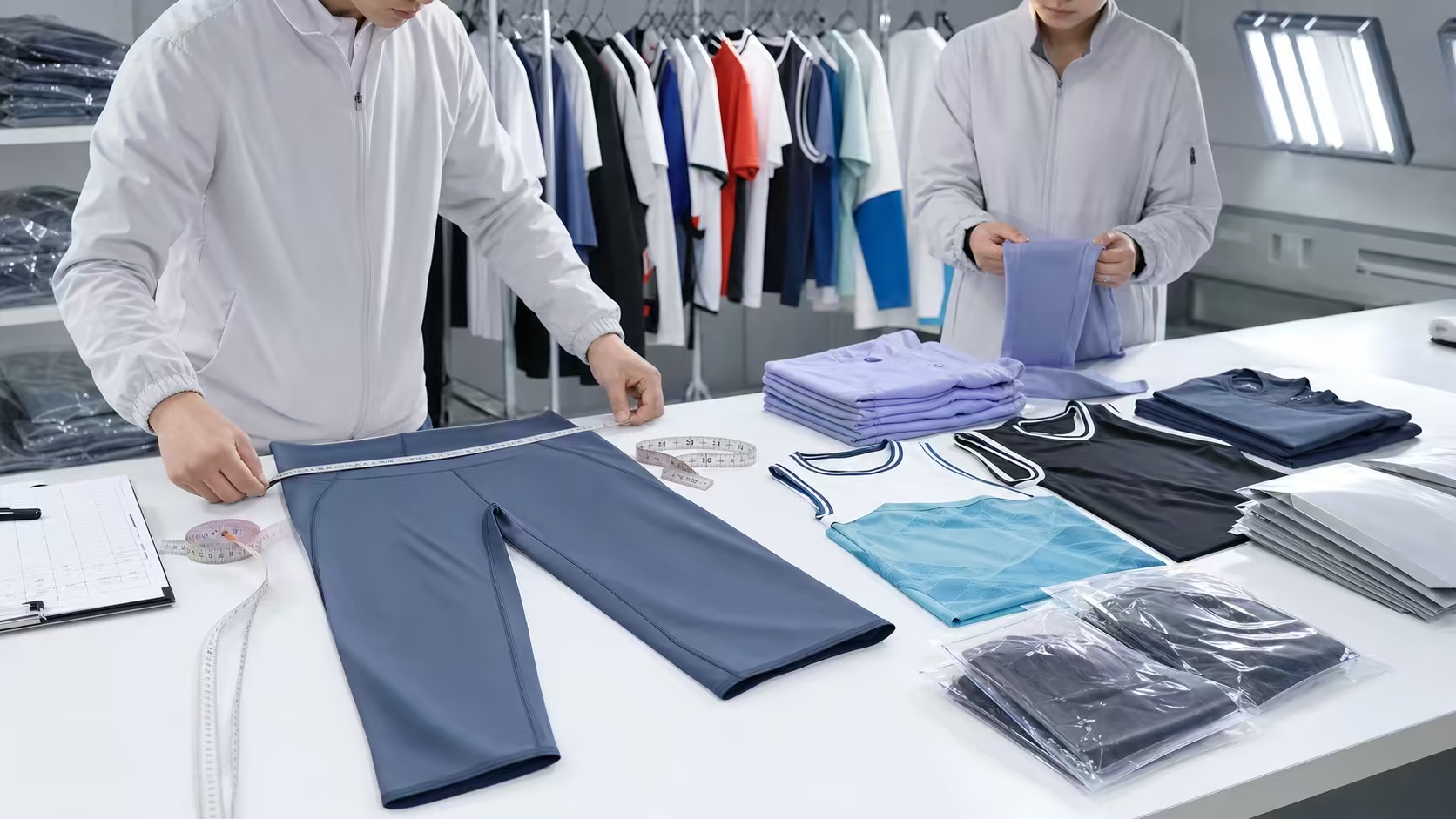
Buyer inspection guide
Define the lot, sampling method, defect classifications, approved references, inspection evidence, and release decision before finished sportswear leaves production.
Direct answer
An AQL inspection uses an agreed sampling plan to decide whether a finished lot meets a buyer-defined acceptance rule. The plan should name the lot, unit, standard and edition, inspection level, sampling scheme, defect classifications, AQL values or alternative limits, approved references, and decision authority. AQL is not a promise that every garment is defect free.
Record the order, style, color, size range, finished quantity, packing completion, inspection location, and unit being counted.
Name the standard, edition, inspection level, sampling scheme, any switching rules, and the resulting sample and decision criteria.
Agree critical, major, and minor definitions for the actual product, market, artwork, roster, labels, and packaging before inspection.
Keep sampled quantities, measurements, defect evidence, counts by class, corrective action, reinspection need, approver, and release status.
2026 standards note
ISO 2859-1:2026 describes sampling procedures for inspection by attributes and replaced the earlier edition in 2026. This guide does not reproduce ISO sampling tables. Obtain the authorized standard, agree how it applies to the order, and record the selected plan in the inspection brief.
Defect classification
The examples below are planning prompts, not universal classifications. Severity depends on intended use, destination market, contract, approved specification, and the effect on safety, function, saleability, identity, or brand presentation.
| Possible class | Working definition | Sportswear examples to classify before inspection | Buyer action |
|---|---|---|---|
| Critical | A condition the buyer defines as creating an unacceptable safety, legal, identity, or use risk. | Sharp object or broken needle risk, missing required warning or tracking information, prohibited component, or another condition the buyer's approved plan treats as critical. | State any zero-tolerance rule, escalation owner, lot hold, investigation, and reinspection requirement explicitly. |
| Major | A condition likely to affect intended use, fit, durability, saleability, personalization, or a material specification. | Open seam, measurement outside tolerance, wrong style or size label, incorrect player name or number, logo adhesion failure, material mismatch, severe shade difference, missing component, or incorrect SKU pack. | Define the defect precisely and show the approved sample, tech pack, roster, artwork, measurement, or packing record controlling the decision. |
| Minor | An isolated departure that does not materially reduce intended use but falls short of the agreed appearance or workmanship standard. | Small removable mark, isolated thread tail, slight nonfunctional asymmetry, or a cosmetic issue within the buyer's written minor-defect definition. | Record location and pattern. Repeated minor issues may show a process problem even if individual units remain minor. |
Inspection scope
A checklist becomes enforceable when the inspector can identify the requirement, method, tolerance or visual standard, defect class, evidence, and result.
| Area | Checks | Approved reference | Evidence |
|---|---|---|---|
| Identity and quantity | Order, style, color, size, SKU, roster, unit count, carton allocation, and packing completion. | Purchase order, SKU file, roster, packing list, and carton map. | Selected-carton record, count sheet, scan result where required, and reconciliation. |
| Fabric and color | Material identity, construction, handfeel, shade or print lot, stretch, recovery, opacity, and trims. | Coded fabric swatch, material specification, lab dip or strike-off, and approved garment. | Comparison photos, measured result or agreed test record, and lot identification. |
| Measurements and fit | Required points of measure, method, tolerance, garment balance, grading consistency, and labeled size. | Released size chart, measurement diagram, tolerance table, and size-set approval. | Completed measurement sheet by inspected size and exception record. |
| Construction | Seam type, skipped stitches, open seams, reinforcement, symmetry, panel alignment, hems, and internal finish. | Tech pack, workmanship standard, approved sample, and first production reference. | Defect photos with garment location, unit ID, classification, and repeated pattern. |
| Decoration and personalization | Artwork revision, color, dimensions, placement, registration, adhesion, embroidery, names, numbers, and sponsor marks. | Approved artwork proof, placement sheet, strike-off or decoration sample, and released roster. | Measurements, comparison photos, adhesion or other agreed check, and data match. |
| Labels and packaging | Brand, size, care, fiber, country, tracking, barcode, polybag, insert, assortment, and carton marks. | Buyer-approved label and packaging files, market brief, SKU file, and packing reference. | Label photos, barcode scan where required, pack-out check, carton check, and count. |
| Function | Zippers, snaps, drawcords, elastic recovery, pockets, padding, reversible construction, and specified use features. | Approved sample, component standard, tech pack, and agreed functional test method. | Functional result, failed unit evidence, repeat check, and corrective-action status. |
Seven-step workflow
Late decisions about defect severity or approved references make a pass or fail result difficult to defend.
Define how much production and packing must be complete, which units form the lot, where it is stored, and whether reworked or split lots are identified separately.
Name the standard and edition, inspection level, sampling scheme, AQL or alternative acceptance rule by defect class, inspection method, and decision authority.
Provide the released tech pack, approved sample, material codes, size chart, artwork, roster, label files, packaging reference, order, and packing list.
Record how cartons, styles, colors, sizes, and units were chosen so the sample is not limited to convenient or preselected pieces.
Use the same measurement method, lighting or comparison conditions, defect definitions, photo naming, unit identification, and evidence rule throughout.
Count and classify results according to the selected method. Do not change a defect class after seeing whether the lot would pass unless the authorized parties document a justified correction.
State whether the lot is accepted, held, reworked, sorted, replaced, or reinspected, then identify the approver and retain the final report with shipment records.
Limits of sampling
A pre-shipment sample can support a lot decision, but it cannot replace product development, process control, or evidence required for every unit.
Use a separate sportswear sample approval checklist to close fit, material, artwork, labels, and packing before bulk release.
Use the sportswear quality control checklist to connect incoming materials, first production, in-line defects, measurements, packing, and final release.
Use a controlled sportswear tech pack so the inspector is not forced to infer construction, tolerances, artwork, or packaging requirements.
Review destination-market documents and testing separately. A sampled visual inspection does not establish every legal, chemical, performance, or labeling requirement.
Continue planning
FAQ
AQL means acceptance quality limit. In an agreed sampling system, it is an index used with the lot size, inspection level, sampling scheme, and defect classification to determine a sample and acceptance decision.
No. An AQL value is not simply the percentage of defects a buyer agrees to receive. It is used within a defined sampling plan, so the selected standard, edition, inspection level, sample size, defect classes, and acceptance rules must be recorded together.
There is no universal value for every garment or defect class. Buyers should select and document rules according to product risk, intended use, destination requirements, brand standard, contractual terms, supplier history, and qualified inspection advice.
No. A sampling inspection supports a decision about the inspected lot under the agreed plan. It does not inspect every unit or replace approved samples, specifications, process control, testing, compliance review, or corrective action.
Prepare the inspection
Define the product, lot, sampling plan, defect classes, approved references, labels, packing, destination, evidence, and release authority before inspection.