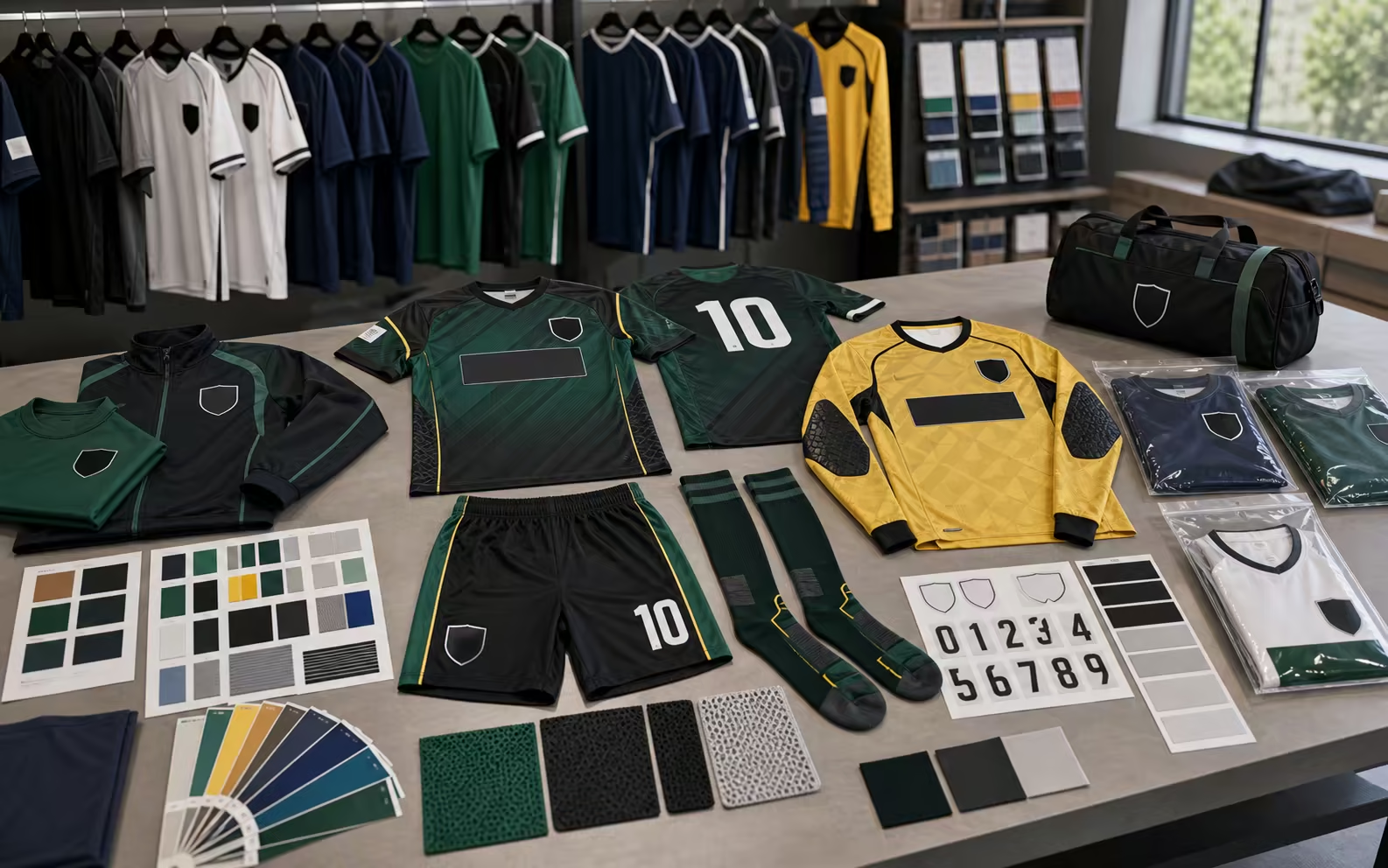
Illustrative product-planning reference: Custom youth sportswear range with school jerseys junior training tops shorts tracksuits hoodies socks caps size labels and player packing

Junior club, school, and league programs

Custom Kids and Youth Sportswear Manufacturer for Clubs

Build youth match, training, travel, staff, and merchandise ranges around the program—not one generic age label. Control size demand, roster data, player packs, delivery waves, and reorders from the brief.

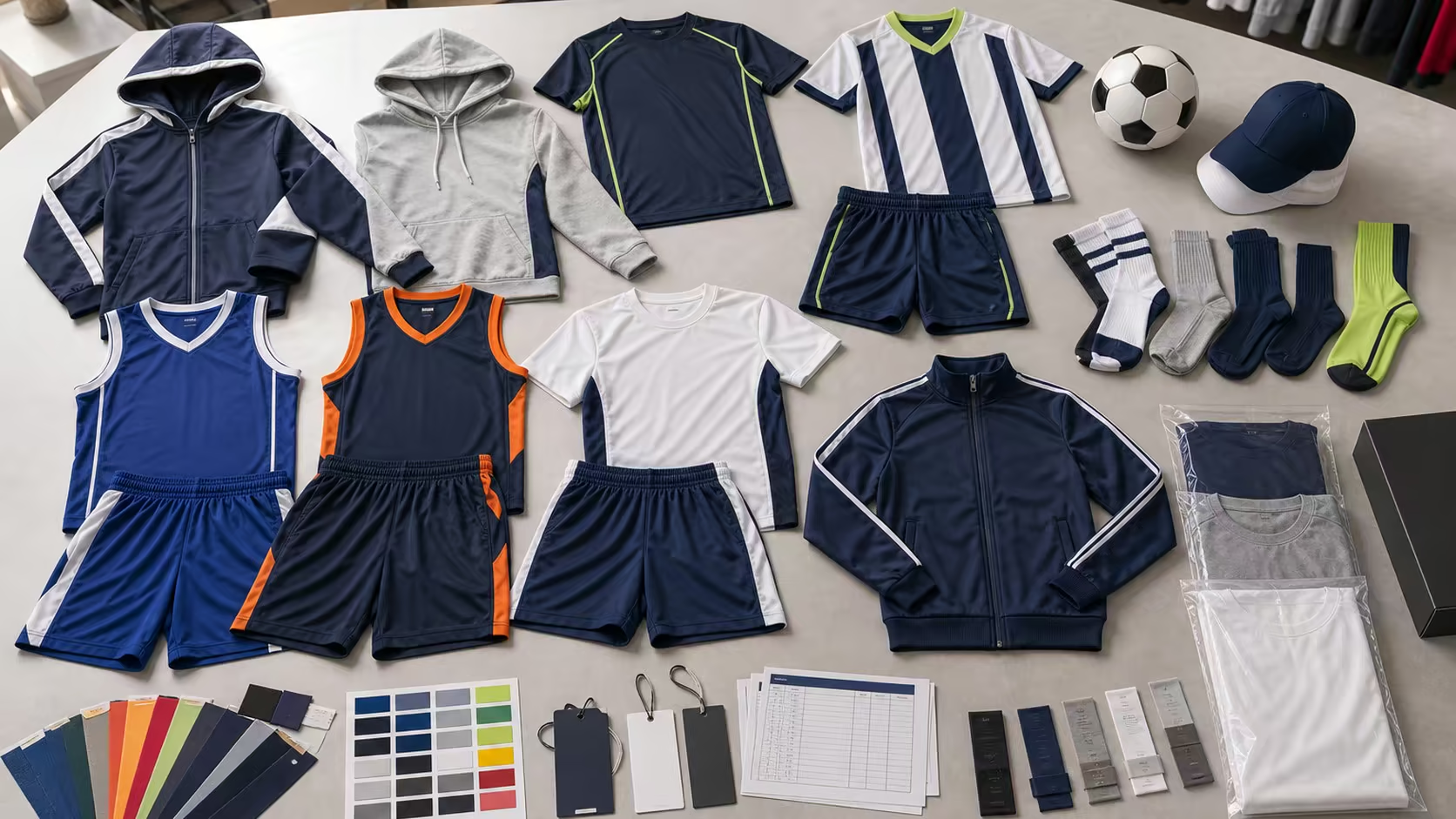
Image and page scope: images are illustrative product-planning references, not photographs of available stock, current production, customer orders, or approved specifications. Exact product scope, materials, construction, decoration, MOQ, sampling, lead time, packing, and reorder conditions require project-specific confirmation.
Direct answer

Plan youth sportswear by program role, size evidence, and season operation

A workable youth teamwear brief identifies the sport, age group, customer, garment role, wearing season, junior and adult size routes, roster owner, personalization rules, quantity by SKU, packing unit, delivery date, and reorder method. A single age label or estimated total quantity is not enough to quote, sample, allocate, or replenish a club program responsibly.

Use this page for collection and commercial planning. Use the youth uniform sizing and order checklist to validate try-on samples, player records, growth assumptions, number conflicts, and the evidence behind release.

Program architecture

Give every youth sportswear style a clear job

Schools and clubs often need more than one match kit. Define which items are mandatory, optional, athlete-issued, staff-issued, parent-purchased, or held as replacement stock before developing the assortment.

Program routeTypical productsPlanning inputsOperational risk to close
Match kitHome and away jerseys, shorts, skorts, socks, goalkeeper or libero colors.Competition rules, age groups, roster, numbers, crest, sponsor positions, size split, and replacement policy.Duplicate numbers, late players, missing sizes, artwork changes, and inconsistent player packs.
Training rangeTraining tees, vests, shorts, joggers, base layers, and lightweight outerwear.Session frequency, climate, washing pattern, color coding, staff visibility, and mandatory versus optional items.Overbuilt packs, unused items, style substitutions, and stock imbalance between sizes.
Travel and sidelineTracksuits, warm-up jackets, hoodies, rain layers, caps, and bags.Weather, layering, school or club identity, travel frequency, athlete and staff differentiation, and name application.Layering fit, mismatched sets, personalization errors, and products arriving after the season starts.
Camp or eventParticipant shirts, coach tops, reversible bibs, shorts, caps, and award items.Registration deadline, forecast attendance, age range, staff ratio, color groups, event date, and contingency stock.Late registrations, uncertain size demand, sorting delays, and leftover dated inventory.
Club retailFan jerseys, hoodies, tees, caps, socks, bags, and optional training pieces.Buyer, sales route, preorder window, retail pricing, size guidance, packaging, fulfillment, and reorder rule.Confusing compulsory and optional items, obsolete stock, returns, and unavailable carryover styles.

Collection scope

Junior teamwear across match, training, and club use

Product selection follows the sport and program. Individual garment construction, measurements, artwork, and performance expectations still require style-specific specifications and samples.

Illustrative product-planning reference: Youth jerseys hoodies shorts socks caps color cards labels and team packing references

Junior team packs

  • Soccer, basketball, volleyball, track, lacrosse, school training, and multi-sport camp apparel
  • Junior and adult transition sizes, labels, roster sorting, athlete names, numbers, and staff differentiation
  • Player, class, squad, campus, event, or destination packing routes
Illustrative product-planning reference: Youth basketball jerseys shorts warm-up apparel socks patches and roster packing references

Basketball and indoor sports

  • Match jerseys, shorts, reversible practice vests, warm-up tops, socks, and coach apparel
  • Home, away, alternate, and replacement roles linked to the approved roster revision
  • Player-pack and team-carton allocation with late-addition and correction routes
Illustrative product-planning reference: Youth football kits with jerseys shorts socks crest number sheets and club labels

Football and outdoor clubs

  • Home and away kits, goalkeeper colors, training tops, tracksuits, jackets, socks, caps, and bags
  • Club crest, sponsor hierarchy, league marks, names, numbers, woven labels, and packaging
  • Carryover color and artwork control for new-player and in-season replenishment

Six planning gates

Move from program brief to controlled season delivery

Keep commercial decisions, size evidence, roster data, and physical samples connected. Each gate should name an owner, revision, open issue, and next approval.

  1. 1

    Define the program and buyer

    Record the school, club, league, camp, distributor, or retail route; sport; age groups; season; wearer groups; countries; and competition or customer requirements.

  2. 2

    Build the assortment

    Label each product as match, training, travel, staff, event, retail, or replacement stock. Confirm which items are mandatory and who pays, orders, and receives them.

  3. 3

    Validate the size architecture

    Define the actual body and garment measurement basis, junior-to-adult transition, layering, fit intent, try-on sample set, and evidence. Do not translate age directly into a garment label without checking.

  4. 4

    Lock artwork and roster rules

    Control crest and sponsor files, placement, color, names, numbers, keeper or role variants, duplicate-number checks, cutoff dates, late additions, and approval authority.

  5. 5

    Allocate and pack

    Convert the approved size and roster records into SKU quantities, player packs, team cartons, destination labels, spare stock, and exception handling. Reconcile totals before production release.

  6. 6

    Deliver and preserve the reorder record

    Record the approved style, fabric, color, artwork, pattern, measurements, labels, packaging, carton allocation, substitutions, and remaining component availability for replenishment.

Planning handoffs

Connect the collection to the records that control it

FAQ

Youth sportswear manufacturing questions

Can youth sportswear be ordered by age alone?

No. Age may help organize a program, but the order should use a defined body and garment measurement system, fit intent, try-on evidence, size route, layering condition, and approved player or SKU record.

Can one youth uniform last for two seasons?

A program may choose a two-season cycle, but future fit cannot be guaranteed. Record the intended cycle, current fit, allowed ease, activity, layering, garment measurements, and parent or club decision without treating oversized first-season fit as a universal solution.

How should late players and replacement jerseys be handled?

Define a cutoff, late-addition route, number-reservation rule, spare stock by size and color, artwork record, approval owner, packing destination, and realistic replenishment assumptions before release.

What belongs in a youth teamwear quote request?

Send the sport, program route, age groups, products, junior and adult size range, quantity by style and color, roster status, artwork, personalization, labels, packing unit, destination, delivery date, reorder plan, and unresolved decisions.

Planning a junior club or school range?

Send the program roles, size plan, roster status, and delivery model.

Include the sport, age groups, products, quantity by style, target market, artwork, personalization, labels, packing, deadline, reorder expectation, and the files or samples already approved.