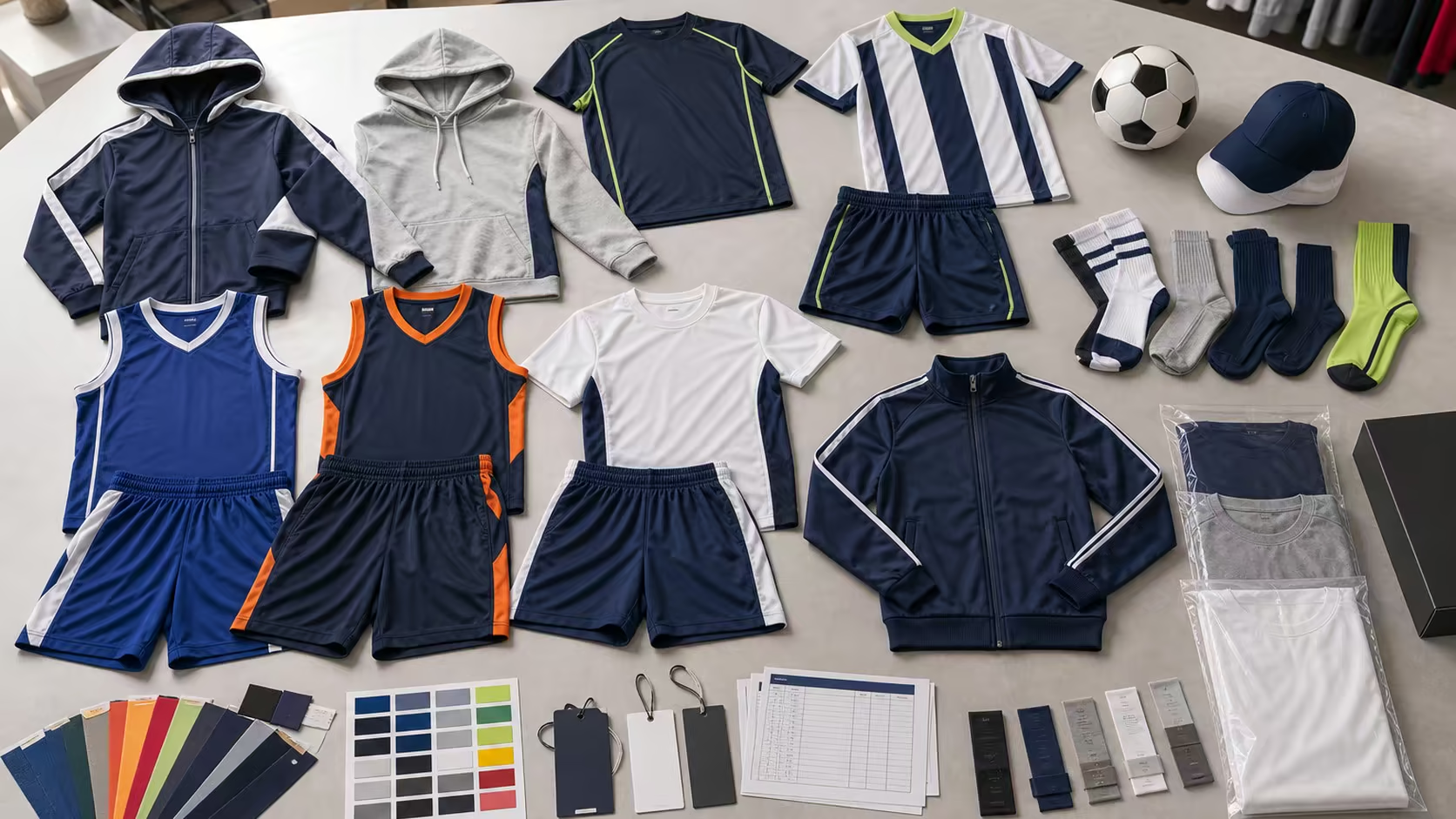
Youth teamwear order validation
How to Validate Youth Team Uniform Sizing and Season Orders
Replace age-only guesses with try-on evidence, controlled size records, approved roster revisions, reconciled quantities, player-pack checks, spare-stock rules, and a realistic reorder path.
Direct answer
Do not release a youth uniform order from age or T-shirt size alone
A controlled youth team uniform order uses a named size chart and garment measurement specification, representative try-on samples, the actual wearing condition, an approved roster revision, unique personalization data, quantity reconciliation, packing rules, spare-stock decisions, and a documented delivery and reorder route. Record who approved each input and which combinations remain untested.
Critical limitation: one child, one sample, or one age label cannot prove fit for an entire age group or next season. A growth allowance is a buyer decision—not a promise that an oversized garment today will fit, perform, or remain available later.
Five records
Separate fit, roster, quantity, packing, and continuity decisions
Uniform problems become expensive when several different records are collapsed into one spreadsheet cell. Keep these layers connected by style ID, revision, size, player or pack code, and approval status.
| Control record | What it should identify | Decision it supports | False shortcut |
|---|---|---|---|
| Size evidence | Size-chart version, garment measurements, sample ID, pattern and material version, wearer or fit-form code, layering, movement, and observed result. | Which size routes can be offered and which samples or transitions need more work. | Ordering from age, height, weight, or usual T-shirt label alone. |
| Roster revision | Player code, squad, garment role, selected size, name, number, goalkeeper or specialist variant, approval, and timestamp. | Which personalization instruction is current and who may change it. | Emailing separate lists without one controlled revision. |
| Quantity reconciliation | Rostered units, staff units, retail units, size samples, replacements, contingency stock, corrections, and total by SKU. | Whether purchase totals match the approved operating plan. | Adding a percentage without defining which size, color, role, or artwork needs the spare. |
| Pack allocation | Player, team, class, campus, event, destination, pack contents, size label, outer identifier, and carton. | How finished units are checked, grouped, distributed, and traced. | Assuming a correct total guarantees every player pack is correct. |
| Continuity plan | Season dates, style life, material and color reference, artwork files, component availability, reorder minimum assumptions, lead-time boundary, and substitution rule. | How late players, lost garments, corrections, and next-season replenishment will be handled. | Promising the same item will remain available without written evidence. |
Eight-step validation
Build the order from evidence, then freeze the release revision
The sequence can be adapted to the club, school, league, camp, or retail program. The release gate should remain explicit even when parents select and purchase sizes directly.
- 1
Define the program boundary
Record sport, age groups, competition level, season dates, garment roles, mandatory and optional products, wearer groups, market, climate, layering, sales route, destinations, and responsible owners.
- 2
Control the size references
Identify the body-measurement source, garment measurement specification, unit, measurement method, size labels, junior-to-adult transition, fit intent, tolerance, pattern version, material version, and style-specific differences. Do not assume every short, jersey, or jacket shares one conversion.
- 3
Select the try-on sample set
Choose representative sizes, range ends, transition sizes, goalkeeper or layered variants, and products with different silhouettes. Label every physical sample. A sample made in another fabric, construction, or pattern revision is a reference—not automatic approval.
- 4
Run a consistent fitting session
Record the wearer or form code, selection basis, intended base layer, standing fit, arm and leg movement, seated or crouched positions relevant to the sport, hem and waistband position, neckline, coverage, restriction, adjustments, and parent, player, coach, or fit-team comments. Keep personal data and images in an access-controlled system.
- 5
Make growth and cycle decisions visible
If the program targets more than one season, state that assumption separately from current fit. Record current ease, acceptable maximum, garment length, layering, next review date, and who accepts the tradeoff. Do not force one larger size to solve every future proportion.
- 6
Freeze the roster and personalization revision
Use player codes, then verify the displayed name, number, squad, garment role, size, color, spelling, special symbols, and approval. Check duplicates within the applicable team or rule set. Define the cutoff and late-change process before production artwork is released.
- 7
Reconcile SKUs, packs, spares, and cartons
Sum rostered, staff, retail, replacement, sample, and contingency units by exact style, revision, color, size, and artwork route. Compare purchase totals with player-pack totals and carton allocations. Investigate every difference instead of balancing the grand total only.
- 8
Approve delivery and reorder assumptions
Record order release, artwork cutoff, expected delivery boundary, destination, receiving check, shortage and correction owner, spare-stock location, reorder scope, and known component or style-life limits. Preserve the approved files and exceptions for the next order.
Problem to evidence
Translate common youth uniform complaints into a controllable check
| Observed problem | Variables to inspect | Evidence and next action |
|---|---|---|
| “The same youth size fits two children differently.” | Body proportions, garment measurements, fit intent, layering, style silhouette, material, sample revision, and movement. | Record the actual sample and wearer codes, measurement relationship, observed areas, selected size, alternatives tried, limitations, and whether another fit route is needed. |
| “We sized up so it would last two seasons.” | Current chest, waist, hip, sleeve, body, short or trouser length; neckline and armhole; layering; sport movement; and expected review date. | Separate present fit from future assumption, record decision owner and accepted tradeoff, and avoid describing future fit as guaranteed. |
| “The jersey fits, but the shorts do not.” | Separate product size charts, waist and hip relationship, rise, inseam, leg opening, elastic or drawcord, and junior-to-adult transition. | Allow mixed-size packs where the program supports them; record each garment size rather than one player-level alpha label. |
| “A late player has no available number or size.” | Roster cutoff, reserved numbers, spare stock, size demand, artwork route, style and component availability, minimums, and delivery need. | Use the documented late-addition path, approve any exception, and update roster, SKU, pack, carton, and reorder records together. |
| “The total is right, but a player pack is wrong.” | Pack ID, player code, garment roles, sizes, name and number data, quantity by SKU, physical label, carton allocation, and inspection sampling. | Reconcile at player-pack and SKU level, correct the source revision, record evidence, and recheck affected packs before release. |
| “The same style is unavailable next season.” | Declared style life, material and color continuity, artwork compatibility, supplier stock, substitution approval, new-sample need, and launch timing. | Revalidate the replacement instead of silently mixing it into the range; record visual and technical differences plus the affected teams and sizes. |
Free worksheet
Download the youth team uniform order validation checklist
The CSV connects program, style, sample, size-chart, wearer or fit-form, roster revision, personalization, quantity, player pack, spare stock, delivery, reorder, evidence, issue, and release fields. It includes an instruction row and one illustrative example.
- Delete the illustrative row before starting a live order.
- Use coded player or wearer identifiers in the shared sheet; store personal details and fitting media with appropriate access controls.
- Create separate rows when products, sizes, colors, artwork routes, squads, or destinations differ.
- Reconcile the CSV with the approved roster, purchase order, artwork files, packing list, and physical samples before release.
Sources and method
Discussion identifies the uncertainty; samples and controlled records decide the order
Recent Reddit discussions informed the questions covered here: a May 2026 youth-kit sizing thread highlights differences between children, brands, try-on access, and one- versus two-season fit; an August 2026 travel-kit discussion raises mandatory assortment, two-year cycles, and style-specific size inconsistency; and discussions about uniform supply and carryover availability and missing sizes, direct parent ordering, numbers, and reuse show that fit, inventory, and operations are separate decisions. Reddit is used for question discovery, not technical proof or market-size estimation.
For apparel body-measurement terminology, see the official overview of ISO 8559-1:2017. The overview does not supply a finished youth size chart, guarantee fit, or replace the licensed standard, target-market research, product-specific garment measurements, pattern work, samples, privacy controls, competition rules, or applicable product and labeling requirements.
Continue the workflow
Connect the order decision to commercial, technical, and quality records
FAQ
Youth team uniform sizing and order questions
Can a club order youth uniforms from the players’ usual T-shirt sizes?
Not reliably. The garment style, brand or supplier chart, measurements, fit intent, material, layering, and sport movement may differ. Use controlled samples and record the actual uniform size selected for each garment.
Should a youth uniform be sized up for growth?
That is a program and parent decision that should be tested and recorded. Review present fit, ease, length, neckline, armhole, waistband, layering, movement, appearance, and the intended cycle. Do not promise future fit from a larger label alone.
Can jerseys and shorts use different sizes in one player pack?
Yes, when the program, ordering system, packaging, and supplier route support it. Record each garment separately and make sure purchase, personalization, packing, and carton data use the same approved selections.
How much spare youth uniform stock should a club order?
There is no universal percentage. Base the decision on registration certainty, likely late additions, loss or damage history, size demand, number rules, style continuity, reorder constraints, budget, storage, and dated-inventory risk.
Does an approved size sample prove the bulk order will fit?
No. It supports the recorded sample, size, material, construction, wearer or form, layering, and test condition. Bulk production must still match the approved references and tolerances, while untested players, sizes, and future growth remain limitations.
Preparing a youth uniform season?
Send the program, garment list, size route, roster status, and packing model.
Include the target age groups, sport, size chart, samples, quantity by style and color, personalization, deadlines, destinations, spare-stock decision, reorders, and unresolved fit or data risks.