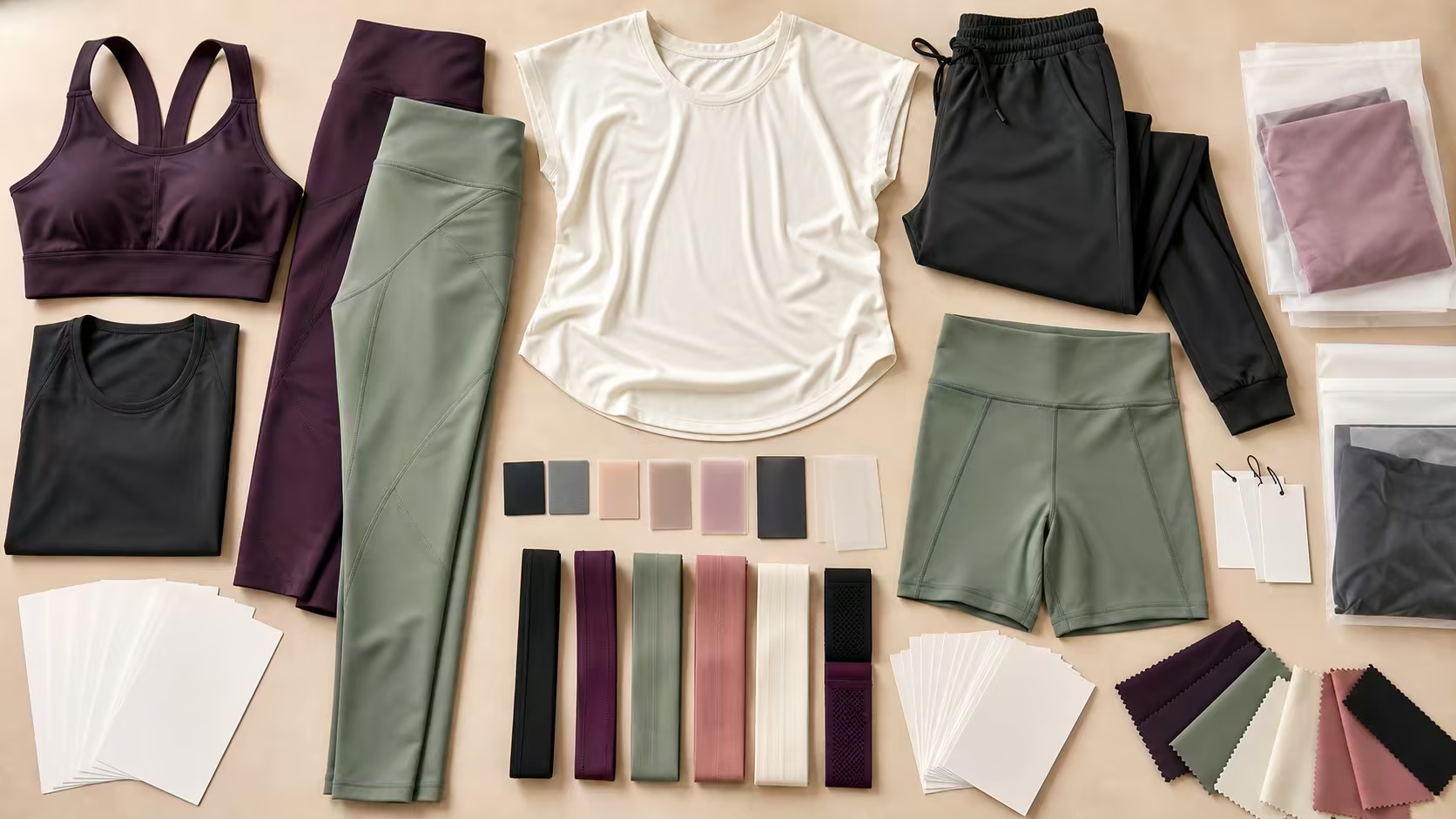
Activewear size-range validation
How to Test Inclusive Activewear Sizing Across Size, Height, and Proportion
Adding labels or alternate inseams does not prove an inclusive fit system. Validate waist-to-hip shape, rise, landmarks, compression, length, movement, and wash response on the actual routes and customers you intend to serve.
Direct answer
Inclusive sizing requires multiple verified fit routes, not uniform enlargement
A practical activewear fit-range plan starts with a defined customer and body-measurement basis, approves a base fit, controls grade rules, then physically checks representative sizes and proportion routes. For leggings, shorts, tops, and one-pieces, review circumference, length, rise or torso length, anatomical landmark position, compression, movement, coverage, pocket load, and post-wash recovery together.
Critical limitation: a larger size, shorter inseam, or longer body length is not validated until the related pattern, garment measurements, material, construction, and on-body result have been checked. One base-size wearer cannot prove the full range.
The fit system
Separate size, shape, and height decisions
Current activewear discussions repeatedly describe a waist fitting while hips or thighs do not, an inseam changing while the knee or ankle remains misplaced, and a nominal high rise landing differently on short and long torsos. Those are different pattern questions.
| Route | Decision it owns | What to verify | Common false shortcut |
|---|---|---|---|
| Core size grade | How body and garment circumferences change through the main range. | Waist, hip, seat, thigh, underbust or chest, ease, compression, balance, seam position, and tolerances. | Applying one equal increment to every point of measure. |
| Shape route | Whether the range needs a different waist-to-hip, torso-to-bust, thigh, shoulder, or other proportion. | Target profile, pattern differences, size labels, stock plan, fitting guidance, and comparison with the core block. | Calling a style “curvy” or “plus” without defining the measurement relationship. |
| Short or petite route | How a shorter height or torso changes more than finished length. | Rise, waistband height, knee and calf position, ankle opening, pocket, gusset, armhole, sleeve, body length, and movement. | Removing length only at the hem. |
| Tall or long route | How longer limbs or torso length affect balance and landmark placement. | Rise, inseam, knee, calf, ankle, torso, sleeve, strap, pocket, compression-zone position, and fabric growth. | Adding all extra length at one line. |
| Product-specific route | How the sizing system changes for leggings, sports bras, tops, dresses, or compression garments. | Product measurements, fit intent, movement, layers, support, coverage, closures, and customer guidance. | Using one alpha-size conversion for every garment type. |
Eight-part validation plan
Build evidence from the target customer to the bulk reference
The fit team should be able to explain why each sample, size, wearer, form, and movement condition was selected.
Define the target customer and market
State geography, product use, age group where relevant, intended fit, layers, support or compression level, size range, and any short, regular, tall, curvy, fuller-bust, or other routes. Avoid using “inclusive” as a substitute for a written profile.
Lock the body-measurement method
Use named landmarks and one controlled method. Keep body measurements separate from garment measurements and protect personal data. The current ISO 8559-1 overview explains why consistent anthropometric definitions matter.
Approve the base fit before broad grading
Close garment balance, rise, key circumferences, mobility, seams, coverage, pressure, pocket position, and construction on the chosen base block. Record open deviations rather than hiding them in a generic approval.
Write product-specific grade rules
Define how every controlled point changes by size and where pattern pieces or construction must transition. Do not infer that a standard body table is a finished garment specification; ease, fabric behavior, cut, and product use still need design decisions.
Select representative risk sizes
Include the base size, range ends, sizes near pattern or construction transitions, and the highest-risk shape or height routes. Add a size when feedback or a material change creates an unverified condition.
Run garment-specific movement checks
Record standing fit, squats, lunges, steps, bends, seated positions, overhead reach, court or running movement, and loaded pockets as applicable. Count adjustments and map where the garment rolls, gaps, slides, restricts, bags, or shifts.
Wash, recover, and repeat
Measure and inspect the sample before and after the proposed care cycle. Retest waistband, compression, length, seams, bonding, straps, closures, surface, opacity, and landmark positions when care can change the fit result.
Release the verified matrix
Connect approved patterns, garment measurements, tolerances, fabrics, construction, labels, size chart, wearer guidance, physical samples, photos, issue closure, and bulk inspection instructions. Mark combinations that remain untested.
Complaint to evidence
Turn fit language into a pattern decision
| Wearer language | Variables to inspect | Evidence to record |
|---|---|---|
| “The hips fit but the waist gaps.” | Waist-to-hip profile, contour, rise, waistband, elastic, fabric recovery, grade, and intended compression. | Body and garment measurements, starting position, movement displacement, adjacent size or shape-route comparison, and pattern correction. |
| “The short inseam still looks wrong.” | Rise, knee, calf, ankle, hem, gusset, pocket and design-line positions—not only total inseam. | Landmark positions in standing and movement, garment balance, before-and-after pattern measurements, and short-route sample result. |
| “My size fits the waist but squeezes my thighs.” | Thigh and seat ease, leg opening, inseam, gusset, fabric stretch and recovery, seam placement, and compression intent. | Pressure location and timing, range of movement, surface stretch, opacity, seam strain, and comparison without forcing a size-down or size-up answer. |
| “High rise lands too high or too low.” | Body rise and torso proportion, waistband height and contour, front and back rise, gusset, pattern balance, and product use. | Named body and garment landmarks, seated and bent positions, rolling or folding, coverage, and short or tall route result. |
| “The ankle bags even when length is correct.” | Calf and ankle grade, taper, hem circumference, knee position, fabric recovery, and how length is distributed. | Calf and ankle measurements, front and side views, movement and wash result, and revised lower-leg pattern comparison. |
Free worksheet
Download the activewear fit-range validation checklist
The CSV records the target segment, size and proportion route, body-profile code, garment and pattern versions, material, wearer or form, waist, hip, thigh, rise, landmarks, length, movement, pocket load, wash, adjacent-size comparison, range transitions, evidence, issue owner, and release decision.
- Delete the illustrative row and create one record for each selected size and route.
- Store personal measurements and fit images in a privacy-controlled system; use codes in the worksheet.
- Do not convert an observed result into a universal fit, comfort, support, or body claim.
Sources and method
Discussion reveals questions; standards and samples control decisions
Recent Reddit threads informed the customer language used in this article, including discussions of short, tall, rise, inseam, waist and hip fit, activewear fit frustrations, and waist-to-thigh tradeoffs in running tights. They are question-discovery sources, not technical proof.
For measurement-system context, see ISO 8559-1:2017, the current ISO 8559-2:2025 size-designation overview, and ISO 8559-3:2018. These references do not replace product-specific patterns, garment measurements, fit trials, market requirements, or the licensed standards themselves.
Continue development
Connect size-range evidence to the commercial product and production record
FAQ
Inclusive activewear fit-testing questions
Is adding more sizes enough to make activewear inclusive?
No. More labels expand choice only when the target customer, body measurements, base block, grade rules, product measurements, materials, representative samples, fitting guidance, and stock plan support them.
Can a petite or tall legging use the regular pattern with a different inseam?
Sometimes a limited length change may work for a defined customer, but it must be tested. Rise, knee, calf, ankle, gusset, pocket, waistband, and design-line positions may also need redistribution.
Which sizes should a brand fit test?
Use a documented risk-based matrix covering the base size, range ends, proportion routes, sizes near pattern or construction transitions, and combinations affected by material or design changes. Add tests when the evidence shows a new risk.
Are body measurements and garment measurements the same?
No. Body measurements describe the intended wearer; garment measurements describe the product. The relationship also includes ease, compression, fabric stretch and recovery, style, construction, and intended use.
Can one fit model approve the full activewear range?
One fit model can help approve the selected base block but cannot represent every size, height, shape, or proportion route. Use representative wearers, forms, measurements, and product-specific movement evidence according to the documented risk.
Building an inclusive activewear range?
Send the target customer, size architecture, product list, materials, and fit problem.
Include the planned size and height routes, body and garment charts, base pattern or reference, representative sample matrix, quantity by SKU, market, artwork, labels, packaging, and unresolved fit decisions.