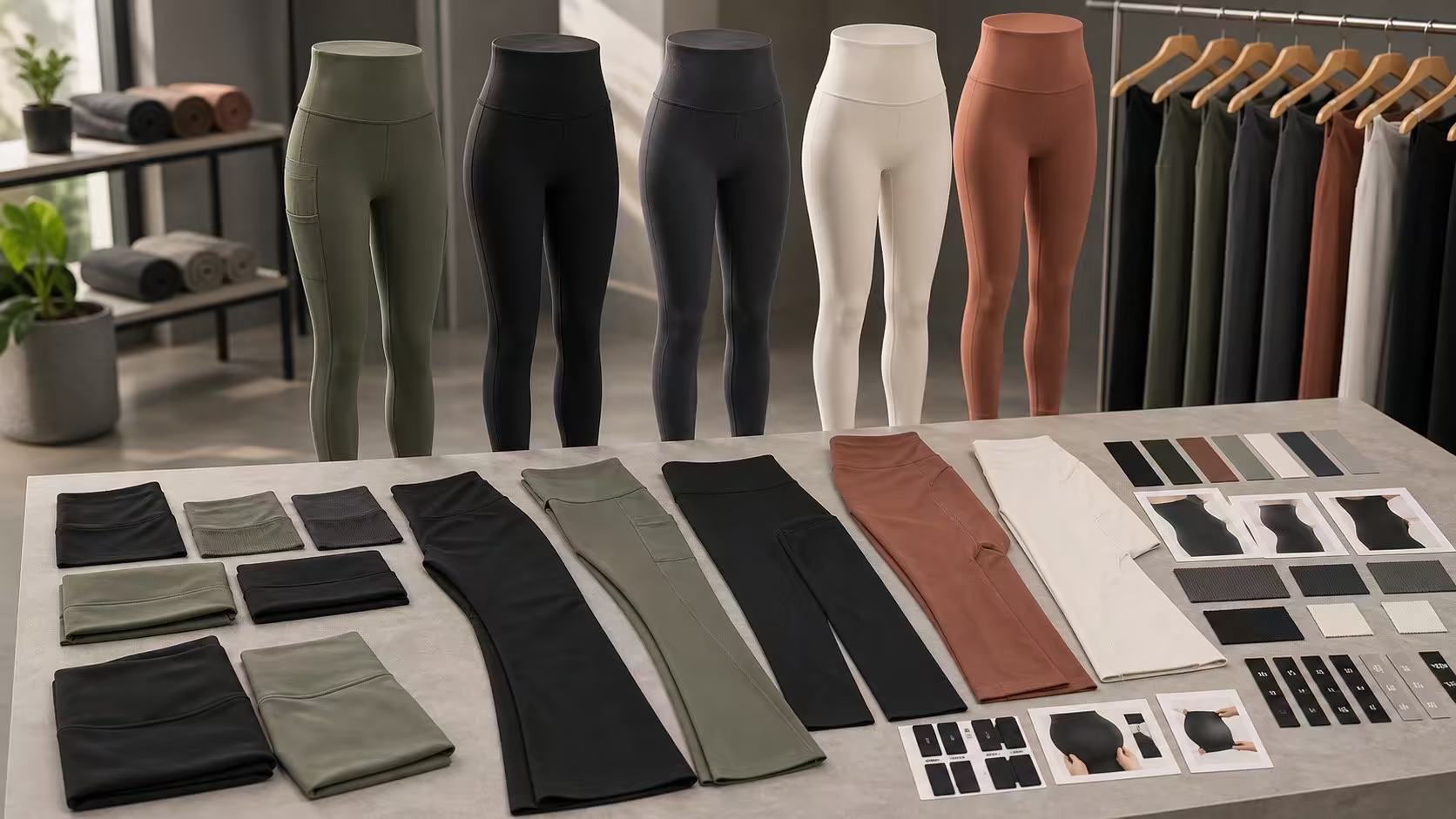
Activewear product validation
Activewear Leggings Quality Testing: Opacity, Fit, Pilling, and Pockets
A soft handfeel and one standing try-on do not prove performance. Build a test matrix that covers the actual fabric, color, size, wearer, movement, wash condition, and production revision you plan to sell.
Direct answer
Test leggings as a color-by-size product, not a fabric swatch
A practical leggings quality plan checks opacity in standing and stretched positions, waistband stability during movement, fit and seam behavior on body, pocket retention, surface change in friction zones, wash response, stretch recovery, moisture visibility, and consistency against the approved production reference.
Critical limitation: one black base-size sample cannot prove a light color, another size, a different inseam, or a changed production fabric. Define which combinations need physical evidence before bulk release.
Voice of customer to specification
Translate wearer language into measurable product questions
Complaints such as “not squat-proof,” “rolls down,” or “pills quickly” are useful discovery signals. The product team still needs to define a repeatable condition and acceptance decision.
| Wearer language | Product question | Sample evidence | Bulk control |
|---|---|---|---|
| “It is see-through when I squat.” | Does coverage remain acceptable for this fabric, color, size, and stretch condition? | Controlled standing, squat, and forward-fold views with recorded lighting, underlayer, wearer, and sample ID. | Approved fabric and color references plus in-line and final comparison against the controlled sample. |
| “The waist rolls or slides down.” | Do rise, contour, top edge, elastic, compression, and hip-to-waist proportion hold the garment in the intended position? | Movement sequence, fit measurements, wearer notes, and before-and-after waistband position. | Pattern, elastic, seam, measurement, and fabric-recovery checks. |
| “The fabric pills between my thighs.” | How does the finished surface change under relevant rubbing, laundering, and wear? | Before-and-after close views at inner thigh, seat, waistband, and pocket contact zones. | Approved fabric lot, face direction, finishing, care label, and inspection evidence. |
| “My phone pulls the pocket down.” | Are pocket depth, opening, placement, reinforcement, and surrounding compression suitable for the agreed item and activity? | Named phone or test item, movement trial, retention result, bounce, access, and distortion notes. | Pocket measurements, seam reinforcement, placement, and production comparison. |
| “The light color shows sweat.” | How visible is moisture, how does it spread and dry, and is that behavior acceptable for the intended use? | Controlled moisture or wear comparison across planned colors with time, condition, and photos recorded. | Color-by-fabric approval and no unapproved finish or material substitution. |
| “The size fits my waist but not my height.” | Does the size system account for inseam, rise, torso-to-leg proportion, compression, and the intended customer? | Representative size and proportion reviews on named wearers or fit forms. | Approved grade rules, inseam options, points of measure, and tolerance checks. |
Eight-part validation plan
Build the test sequence before the sample arrives
Write the test condition and acceptance rule first. Otherwise, the team may accept a sample visually and invent the standard only after a customer complaint.
Identify the exact sample
Record style, sample stage, sample ID, revision, fabric code, color, size, inseam, pattern revision, and reviewer. Photograph the physical label so the result cannot be assigned to the wrong garment.
Run an opacity and coverage review
Use consistent front, back, and side lighting. Review standing, deep squat, forward fold, and other relevant stretched positions over a controlled underlayer. Repeat the review for every material or color combination that could behave differently.
Review waistband stability during movement
Record the starting position, then complete a defined sequence such as walking, squats, lunges, step-ups, seated movement, and hip hinges. Note rolling, gaping, digging, sliding, or repeated wearer adjustment.
Check fit, gusset, seams, and mobility
Review front and back rise, inseam, gusset shape, seam location, pressure points, coverage, restriction, bagging, and garment balance. A “no front seam” brief still needs a construction and fit decision for the crotch and gusset area.
Test the pocket with an agreed item
Name the phone or object, its approximate dimensions and weight, and the intended activity. Review entry, reach, retention, bounce, distortion, pressure, seam strain, and whether the item interferes with movement.
Record surface, wash, and recovery change
Inspect high-friction zones before and after controlled rubbing, wear, and laundering under the proposed care instruction. Measure relevant points before extension and again after an agreed recovery interval. Photograph pilling, fuzzing, glazing, color change, seam change, or residual growth.
Compare moisture visibility and drying behavior
For colors where sweat appearance matters, record the moisture condition, spreading, show-through, cling, handfeel, and drying sequence. Use precise observations instead of unsupported “sweat-proof” or “quick-dry” claims.
Release a controlled production reference
Approve the physical sample together with the current fabric, pattern, measurements, artwork, labels, packaging, test results, and accepted deviations. Use that package during in-line and final inspection.
Coverage matrix
Decide which colors and sizes need physical evidence
A full combination matrix may be unnecessary, but choosing only the easiest black base-size sample can hide the highest-risk result.
| Variable | Why it can change the result | Risk-based evidence choice |
|---|---|---|
| Light vs dark color | Coverage, sweat visibility, shade consistency, and surface appearance can differ. | Test the production-intent lightest or highest-risk color, not only black. |
| Base vs range-end size | Stretch state, rise, seam position, coverage, and compression may change across the grade. | Review the base size plus representative range-end or proportion-sensitive sizes. |
| Standard vs alternate inseam | Knee position, calf compression, hem position, and overall balance can move. | Check each new pattern or grade route rather than assuming only length changes. |
| Print, wash, or finish | Heat, chemistry, coating, sublimation, brushing, and finishing can affect stretch, handfeel, color, or recovery. | Test the finished production-intent material, not an untreated greige or color swatch alone. |
| Pocket or seam variant | Added layers and seams can change stretch distribution, pressure, appearance, and movement. | Review each construction variant that changes load or fit behavior. |
Free worksheet
Download the activewear leggings quality test checklist
The CSV includes sample identity, opacity, waistband, movement fit, pocket, seam, durability, wash, recovery, moisture, branding, bulk comparison, issue ownership, evidence, and release fields.
- Replace the illustrative row and define your own product-specific conditions.
- Create separate records for material, color, size, inseam, and construction combinations that need evidence.
- Link photos, videos, measurement sheets, lab reports, and approved physical samples instead of writing “pass” without context.
Common mistakes
What a leggings test plan should stop
| Mistake | Why it fails | Better control |
|---|---|---|
| Approving opacity from a fabric held by hand | The stretch, layers, seam, color, size, and body condition differ from the finished garment. | Review the sewn production-intent sample in named positions and conditions. |
| Calling one sample “squat-proof” for the whole line | Color, fabric lot, size, pattern, and finish can change coverage. | Define the tested combinations and do not extend the claim beyond the evidence. |
| Sizing down to stop waistband movement | Extra stretch can create pressure, coverage, seam, and fit problems elsewhere. | Review contour, rise, elastic, pattern balance, grade, fabric recovery, and intended compression together. |
| Using first-touch softness as durability evidence | Handfeel does not show how the face changes under friction, laundering, or repeated use. | Record controlled before-and-after surface, wash, and wear evidence. |
| Changing fabric after fit approval | Stretch, recovery, weight, friction, opacity, support, and seam behavior may change. | Repeat the affected fit and performance checks on the replacement fabric. |
| Approving a phone pocket without a phone | Opening, depth, bounce, distortion, access, and seam load remain untested. | Name the item and perform the intended movement sequence. |
Continue development
Connect test results to product, fabric, fit, and sample approval
FAQ
Activewear leggings quality questions
How do brands test whether leggings are squat-proof?
Define a controlled coverage review using the actual sewn sample, fabric, color, and size. Record standing and stretched positions such as a deep squat under consistent lighting and underlayer conditions. Repeat for combinations that may behave differently and state the limit of the evidence.
Does higher GSM always make leggings less see-through?
No single material number proves finished-garment opacity. Fiber, knit construction, yarn, dye or print, finish, color, pattern stretch, size, and fit condition can all affect coverage. Approve the actual production-intent color and garment.
How can a brand test whether a leggings waistband will roll down?
Record starting position and fit measurements, then use a defined movement sequence with named wearers or fit forms. Review rise, contour, top edge, elastic, compression, gaping, digging, sliding, rolling, and repeated adjustment across representative sizes.
How should leggings pilling be checked?
Define relevant friction, wear, and laundering conditions, then record before-and-after surface change at the inner thigh, seat, waistband, pocket, and other contact zones. Link the result to the exact fabric lot, finish, care route, and sample revision.
Should every leggings color and size be physically tested?
Use a documented risk-based matrix. Include material or construction changes, the lightest or highest-risk colors, the base size, representative range-end or proportion-sensitive sizes, and alternate inseam or pocket variants when they can change fit or performance.
Developing private-label leggings?
Send the target wearer, activity, fit, colors, size range, and test priorities.
Include reference products, fabric direction, waistband and pocket requirements, artwork, packaging, quantity, market, and any failure you want the sample plan to prevent.