Garment substrate
Record style, size, colorway, fabric code, composition, construction, finish, dye route, and lot. Stretch, surface, color, coatings, seams, and panels can change decoration behavior.
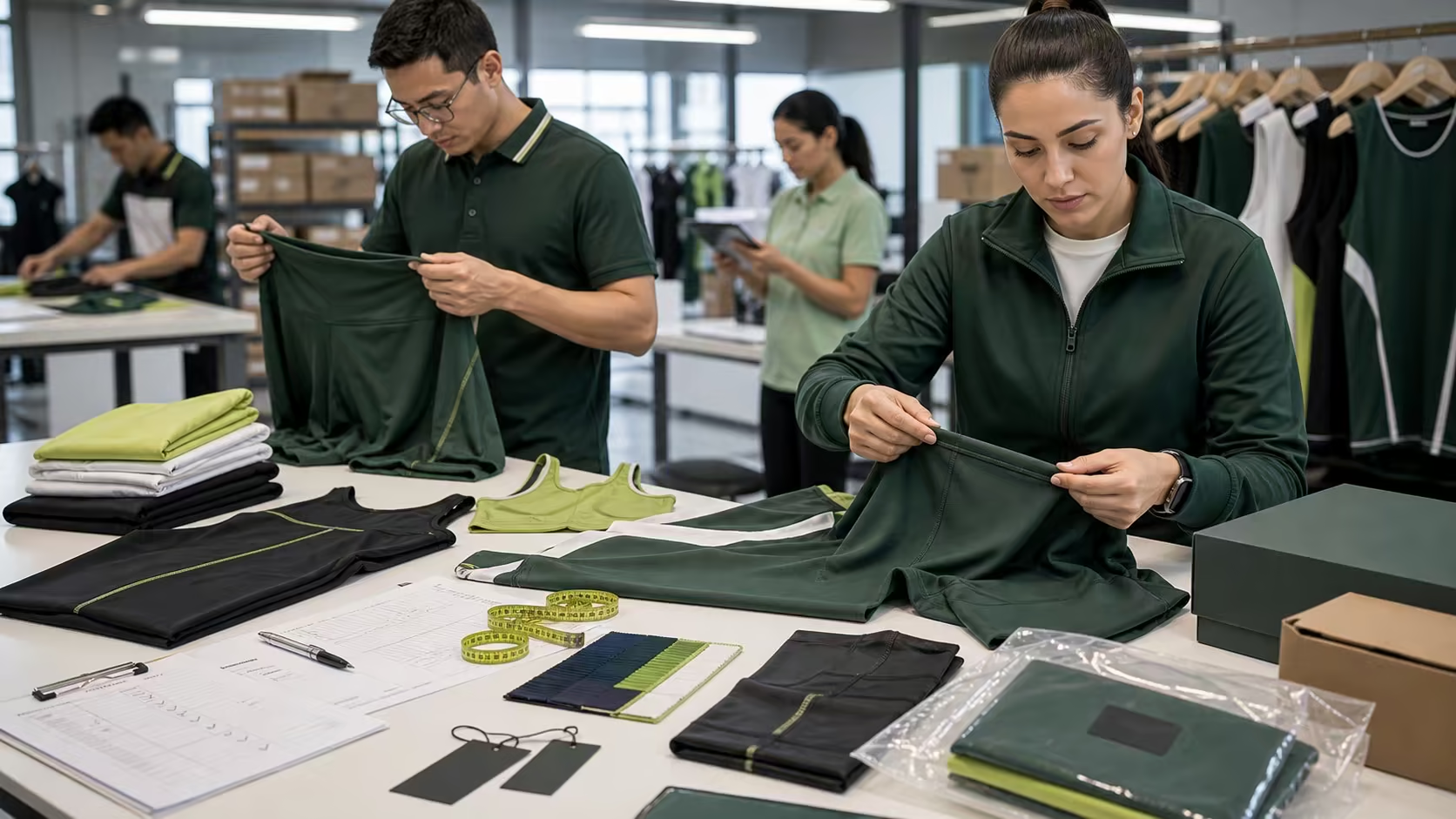
Decoration durability and care validation
Connect the exact garment, decoration system, production route, care procedure, cycle gates, defect evidence, corrective action, and release decision before approving bulk logos.
Direct answer
Test a production-route decoration on the approved garment fabric and color, using a written washing and drying procedure that matches the care claim and target market. Set the specimens, conditioning, cycle gates, inspection conditions, defect definitions, acceptance criteria, affected scope, and decision owner before washing starts. Keep an untreated reference and dated evidence at baseline and every agreed gate.
There is no responsible universal promise such as “50 washes proves every print.” A result belongs to the named style, fabric lot, colorway, size, decoration materials, artwork, application or curing route, care procedure, sample set, and acceptance criteria. Changed inputs need an explicit bridging decision or new evidence.
Test identity
A wash count without a traceable specimen and process cannot support a production decision.
Record style, size, colorway, fabric code, composition, construction, finish, dye route, and lot. Stretch, surface, color, coatings, seams, and panels can change decoration behavior.
Identify screen-print ink, heat-transfer or DTF system, patch, badge, embroidery, label, adhesive or attachment, underbase, layers, dimensions, placement, and artwork revision.
Trace the production line, equipment, supplier, application date, qualified settings or controlled process record, and conditioning before care. A mockup or substitute swatch is not the final route.
State the intended care statement, wearer use, market, sample stage, sizes and colors represented, customer claim if any, and the exact decision the test must support.
Method fit
Use one controlled record, but do not force every method into one defect description or universal pass rule.
| Decoration route | Identity to control | Possible observations |
|---|---|---|
| Screen print | Ink system, underbase, layers, mesh or separation route where relevant, substrate, application and qualified cure record. | Cracking, flaking, surface change, color or opacity change, distortion, adhesion concern, and change against the untreated reference. |
| Heat transfer or DTF | Film, ink and adhesive system, carrier, artwork, substrate, press route, qualified time-temperature-pressure record, and peel route. | Edge lift, peeling, cracking, wrinkling, migration, surface change, handfeel change, or local separation at seams and textured areas. |
| Patch, badge, or label | Component material, backing, edge, adhesive, stitch, weld or other attachment, location, substrate, and physical sample. | Corner lift, detachment, fraying, distortion, puckering, delamination, color change, abrasion, or damage to the underlying garment. |
| Embroidery | Thread, backing, stitch construction, density, placement, garment support, trims, and finishing route. | Puckering, distortion, thread or backing change, loose ends, color change, abrasion, attachment integrity, and garment damage. |
| Sublimation | Artwork, profile, output system, dye, transfer medium, production fabric and lot, and process conditions. | Use the separate sublimation color workflow for target-to-output control; care testing can still record color, surface, seam, and whole-garment changes. |
Controlled workflow
A useful protocol is reproducible enough for another qualified owner to understand what happened and why a sample passed, failed, or remained on hold.
Define sample stage, specimen count, represented sizes, colors, lots, decoration positions, untreated reference, control samples, exclusions, and the production order or claim at stake.
Record method and edition, machine type, program, water temperature, detergent, load or ballast, specimen orientation, drying route, drying temperature, ironing or pressing restrictions, deviations, and protocol owner.
Choose baseline and cumulative cycle gates before testing. Define conditioning and when the sample is inspected after each wash-and-dry sequence rather than comparing wet, hot, and cooled specimens interchangeably.
Map the exact logo, edge, letter, number, patch, seam, or label area. State how edge lift, peeling, cracking, fading, distortion, puckering, adhesion, attachment, and other changes will be observed or measured.
Photograph and inspect every specimen under the agreed conditions before washing. Link the artwork, garment, care-label revision, retained reference, process record, and any pre-existing variation.
Log completed cycles and deviations. Use comparable lighting, angle, scale, conditioning, location map, rating method, and photo naming at each gate; preserve raw readings where an instrument or qualified peel method is used.
If a result crosses the agreed limit, hold the affected sample, decoration batch, garment lot, colorway, or order scope. Do not infer one root cause from appearance alone; review process and material records and plan qualified confirmation.
Approve, hold, reject, or require corrective action and retest. Name the decision owner, date, covered styles, colors, sizes, fabric lots and decoration batches, plus any evidence needed when an input changes.
Free worksheet
The 59-field CSV connects the garment and decoration identities to the production route, care protocol, cycle gates, inspection condition, defect map, criteria, result, corrective action, retest, evidence, and release scope.
Failure evidence
One visible symptom can have multiple possible contributors. Evidence should narrow the affected scope before a process owner changes materials or settings.
| Observation | Evidence to retain | Decision boundary |
|---|---|---|
| Edge lift or peeling | Exact location, extent, cycle gate, garment panel, fabric lot, decoration batch, attachment system, process record, photos, and retained specimen. | Do not diagnose adhesive, pressure, temperature, surface, contamination, storage, or care misuse from the photo alone. |
| Cracking or flaking | Crack pattern, affected layers, stretch state, substrate, print thickness or build where controlled, cure record, cycle history, comparison reference, and lot scope. | Anecdotal advice can generate questions; qualified process review and confirmation establish corrective action. |
| Color or surface change | Baseline and gate images, viewing condition, instrumental method if agreed, garment color, dye or print system, detergent, drying, and transfer or migration observations. | Use an agreed appearance or color method; camera output and screen display are not a universal measurement. |
| Distortion or puckering | Garment and decoration dimensions, attachment location, fabric recovery, seam proximity, drying condition, before-and-after appearance, and representative sizes. | Separate decoration change from whole-garment shrinkage, growth, torque, or construction change. |
| Consumer return | Product identity, purchase and care history where lawfully available, photos, physical return, lot trace, care label, complaint wording, and comparable retained samples. | A return informs investigation; it does not by itself prove production cause, misuse, full-lot scope, or a legal remedy. |
Sources and method
Current discussions include a screen-printed sample reported to show cracking after three washes, a football jersey whose patches and prints peeled during a heated wash-and-dry experience, and a name set reported to lift before the first wash. These posts supply buyer and wearer language. They do not prove the cause, sample history, full production-lot scope, correct care, or an appropriate remedy.
ISO 6330:2021 specifies domestic washing and drying procedures for textile testing, including defined washer types, washing procedures, reference detergents, ballast, and drying routes. ISO 15487:2018 covers assessment of apparel appearance after one or several domestic washing and drying treatments. ASTM D3938-18(2023) is a guide for determining or confirming apparel care instructions, while the AATCC method directory includes care, colorfastness, and appearance methods. These sources do not create one universal logo pass criterion.
For covered U.S. apparel, the FTC Care Labeling Rule guide says care instructions and warnings need a reasonable basis and explains that evidence should address the garment as a whole, including components. Other markets and products need their current rules, qualified test owners, and project-specific evidence.
Continue the workflow
FAQ
There is no universal number. Set the target from the product, care claim, market, use case, customer requirement, decoration system, risk, and qualified method. State the cycle count as one part of the protocol, not as a universal life guarantee.
A swatch can answer a defined material or process question, but it may not represent seams, panels, garment stretch, surface variation, placement, layered components, drying behavior, or interaction between the decoration and the complete garment. Define what the swatch covers and what still needs a garment specimen.
No. Record which fabric, colorway, size, lot, decoration materials, supplier, process route, artwork, placement, and care protocol the result represents. A qualified owner must decide whether changed variants are covered, need bridging evidence, or require new tests.
Photos are useful evidence when lighting, angle, scale, conditioning, sample identity, and cycle gate are controlled. They do not replace a specified method, raw measurements where required, physical retained samples, or written acceptance criteria.
Record the gate and exact location, hold the affected scope, preserve the specimen and process records, compare controls, review possible material and process contributors with qualified owners, define corrective action, and retest the controlled revision before release.
Need a production-ready decoration brief?
Include current sample photos, style and color scope, production files, label copy, quantity, delivery timing, known issues, and the evidence required before bulk release.