Choose OEM when
You have controlled specifications, measurement charts, approved artwork, label files, packaging instructions, and a clear approval process.
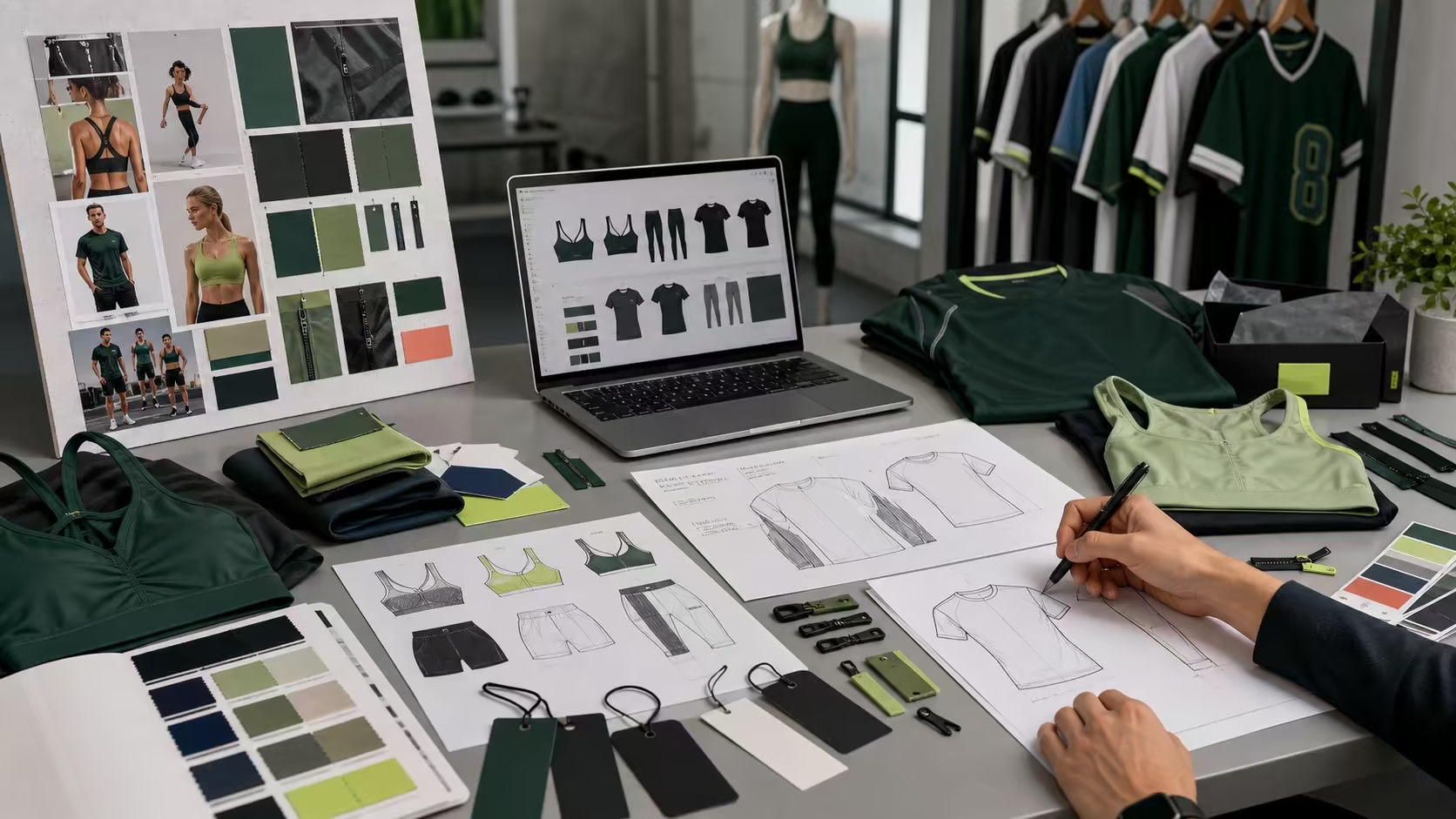
Buyer guide
OEM starts from your controlled specification. ODM starts from a commercial brief and requires more supplier input. The right route depends on what is already decided and what still needs development.
Direct answer
In an OEM project, the buyer owns the product direction and supplies a usable specification such as a tech pack, measurements, artwork, and packaging rules. In an ODM project, the buyer supplies a market goal and references, while the supplier helps turn those inputs into a product plan. Because factories use these terms differently, confirm the exact deliverables and review the supplier's private label sportswear manufacturer capabilities before comparing quotes.
You have controlled specifications, measurement charts, approved artwork, label files, packaging instructions, and a clear approval process.
You have a target customer, product references, price position, quantity plan, and launch goal but need help defining the product.
You want to adapt a proven base style through color, logo, labels, simple trim changes, and branded packaging.
Core styles follow your tech packs while supporting styles, trims, fabric options, or packaging use supplier development support.
Decision table
The labels matter less than the actual division of work. Use this table to state who supplies each decision, file, and approval.
| Route | Buyer starts with | Supplier contribution | Best fit | Main tradeoff |
|---|---|---|---|---|
| OEM | Tech pack, measurements, construction notes, bill of materials, artwork, labels, packaging, and target quantity. | Feasibility review, material sourcing, pattern and sample execution, production, inspection, packing, and shipment preparation. | Established brands with approved products or an in-house product team. | An incomplete or conflicting specification can be reproduced unless questions are resolved before sampling. |
| ODM | Customer profile, reference images, target products, price position, brand direction, quantity, market, and launch date. | Product architecture, material and trim options, construction suggestions, sample plan, branding route, and packaging coordination. | New collections, buyers without complete tech packs, or teams that need development support. | More decisions must be documented during sampling, so responsibility and approvals need to be especially clear. |
| Light custom | A proven supplier style, color direction, logo artwork, labels, packaging, size range, and order breakdown. | Base-style selection, compatible decoration options, sample execution, branding, and packing. | Market tests, event merchandise, club programs, and faster private label launches. | Fit, construction, or fabric choices may be limited by the selected base style. |
| Hybrid | Complete files for priority styles and a development brief for the rest of the collection. | OEM execution where files are complete, plus ODM support for unresolved styles or components. | Brands that need control over hero products without developing every supporting item from zero. | Each style must be labeled clearly so assumptions do not move between the two workflows. |
Working method
A buyer can make this decision before discussing price by auditing the information already available for each style.
Create one row per product. A collection may use OEM for leggings, light custom for tees, and ODM for a jacket.
Record whether fit, measurements, fabric, construction, colors, artwork, labels, and packaging are fixed or still open.
State the activity, target customer, selling region, intended retail position, and any required sizing or labeling rules.
Protect the details that define the product while allowing alternatives for materials, trims, or processes that can change.
Confirm who creates patterns, measurement charts, artwork layouts, labels, packaging files, sample comments, and bulk standards.
After sampling, consolidate the final specification and signed comments so production does not rely on scattered messages.
Useful in practice
A route does not need to cover the entire order. It can be assigned style by style, as long as the scope is written into the development sheet.
Quote preparation
Quotes are difficult to compare when one supplier assumes standard materials and another assumes custom development. Send the same brief to every shortlisted supplier.
| Input | What to provide | Why it changes the route or quote |
|---|---|---|
| Product scope | Style list, reference images, gender or wearer, activity, and target market. | Shows whether the supplier is executing a defined item or developing a product concept. |
| Specification status | Tech pack, measurements, approved sample, or a list of details still open. | Reveals the development work that must happen before a production quote is reliable. |
| Commercial plan | Total quantity, style-color-size breakdown, target position, and launch timing. | Helps test whether material, decoration, and packaging choices fit the planned scale. |
| Brand system | Logo files, placement, labels, hangtags, barcodes, packaging, and carton requirements. | Prevents branding components from being treated as late additions. |
| Approval rules | Decision maker, sample stages, wear-test needs, tolerance, inspection, and final approval record. | Defines when development is complete and what becomes the bulk-production standard. |
Continue planning
FAQ
No. Cost depends on the product and the development work included. An ODM project may include more early-stage support, while an incomplete OEM specification can also require extra sampling and correction.
Yes, as an initial ODM discussion. Add the target customer, product list, quantity, market, price position, logo files, fabric preferences, packaging needs, and launch goal so the references are not interpreted in isolation.
Yes. Assign a route to each style or component. Keep the scope explicit so everyone knows which specifications are controlled by the buyer and which decisions the supplier is expected to develop.
Many new brands begin with light custom or a focused ODM brief because they do not yet have complete specifications. The best route is the one that matches the team's ability to define, review, and approve product details.