Product and garment zone
Record style, product, size, color, fabric code and lot, construction, mass, finish, liner, mesh, print, seam proximity, underarm, back, waistband, gusset, and any other tested zone.
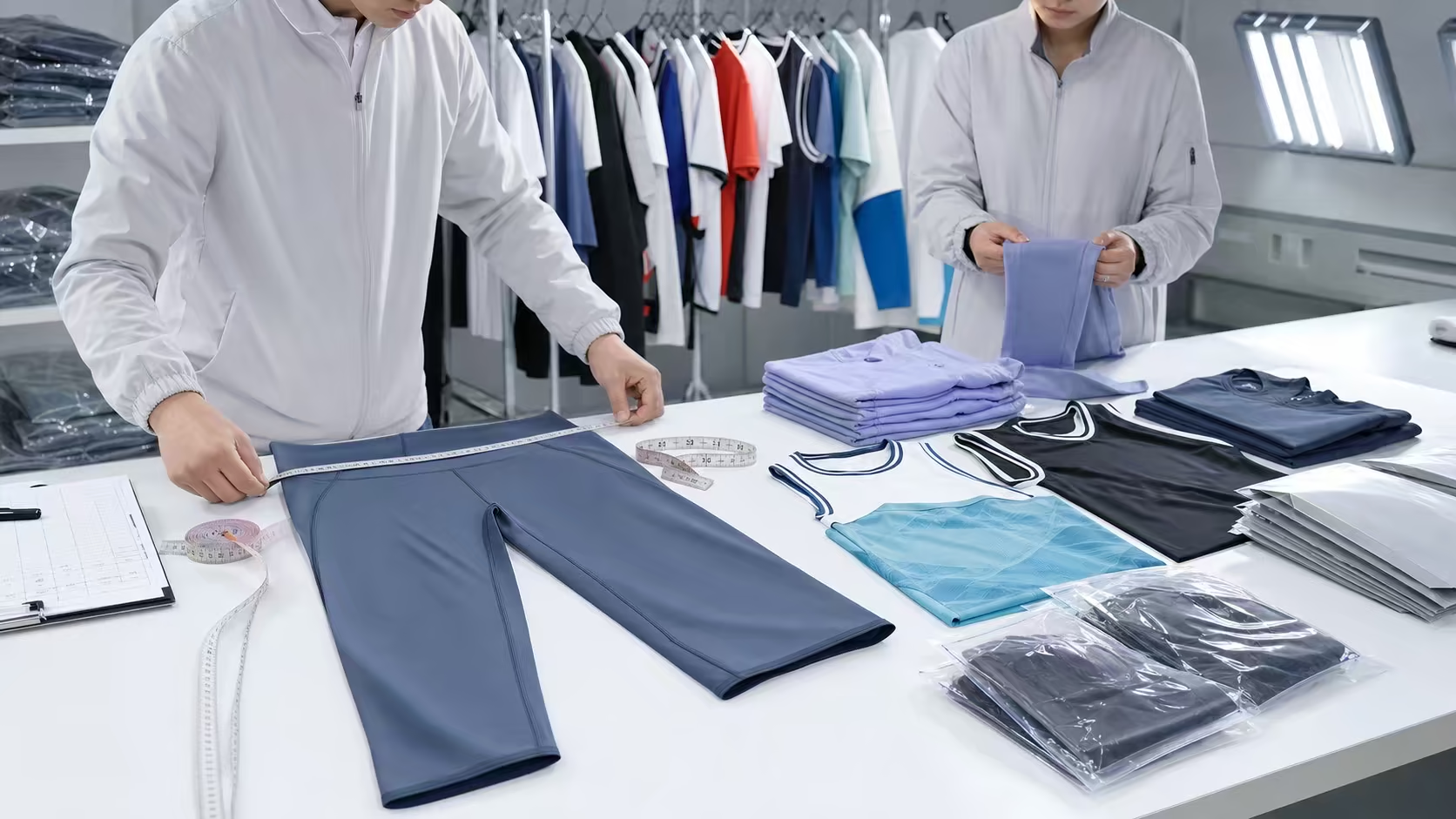
Activewear odor and antibacterial claim validation
Connect wash-return odor, odor adsorbency, bacterial-odor reduction, antibacterial activity, care durability, controls, limitations, and released wording to the exact product scope.
Direct answer
Start with the exact words the customer will see and the mechanism those words imply. Test the production-intent fabric, finish, garment zone, color, lot, application route, care state, and named control with a method that measures that mechanism. Keep odor evidence, antibacterial-activity evidence, garment wear observations, finish durability, safety review, and destination-market claim review as connected but separate records.
An antibacterial result does not automatically prove lower wearer odor, and an odor result does not prove protection from germs or disease. AATCC TM211, TM216, TM100, and TM147 address different questions; a brand must not swap one result into a broader claim.
Question-to-evidence fit
The complaint “it smells again” and the claim “antibacterial” do not identify one mechanism or one suitable test.
| Question | Possible evidence route | What it cannot establish alone |
|---|---|---|
| Does odor remain after the stated care route? | Use identified production garments or panels, a written soil or wear history, the intended wash and dry route, controlled post-care handling, a named comparison, and qualified odor observation. | One returned item or an uncontrolled smell check cannot identify root cause, full-lot scope, treatment durability, or a universal laundering solution. |
| Does odor return after storage, warmth, moisture, or wear? | Define the clean-state baseline, storage interval and condition, reactivation or wear condition, observation timing, control, panel or instrument route, and garment zones. | “Odor rebloom” is an operational description, not proof that one fiber, microbe, detergent, finish, or wearer caused the result. |
| Does a treated textile reduce bacteria-generated odor? | AATCC TM211 addresses bacterial-odor reduction on antibacterial-treated textiles. Use its current approved edition through a qualified owner. | The method does not become proof of every malodor mechanism, every whole garment, every care state, or public-health protection. |
| Does the material adsorb a representative malodor? | AATCC TM216 quantitatively evaluates odor adsorbency with a representative human-origin malodor and an identical untreated reference where available. | Odor adsorbency is not the same result as antibacterial activity or bacterial-odor reduction. |
| Does the textile show antibacterial activity? | Qualified methods such as AATCC TM100 or TM147 may address antibacterial activity for the tested textile and protocol. | Microorganism reduction or inhibition does not automatically establish lower perceived odor, wearer benefit, disease prevention, skin safety, or legal claim status. |
Test identity
Evidence belongs to the named material, treatment, care state, method, comparison, and decision—not to a marketing phrase in isolation.
Record style, product, size, color, fabric code and lot, construction, mass, finish, liner, mesh, print, seam proximity, underarm, back, waistband, gusset, and any other tested zone.
Identify treatment chemistry without inferring performance, supplier, batch, application stage, process record, production line, curing or finishing record, and any input change after the tested sample.
Name initial, washed, aged, stored, worn, re-wetted, or other state; the exact wash and dry procedure; cycles; conditioning; challenge identity; exposure; post-wear storage interval; and observation timing.
Copy the wording, channel, market, product scope, intended beneficiary, express meaning, reasonable implied meaning, comparison, criterion, evidence owner, exclusions, and regulatory review.
Controlled workflow
Method selection follows the claim and mechanism; the claim must not expand after a favorable result.
Capture the PDP, label, packaging, sales-sheet, marketplace, or wholesale wording. State whether it implies residual-odor control, reduced odor return, odor adsorbency, bacterial-odor reduction, antibacterial activity, product preservation, wearer protection, or another benefit.
Identify styles, colors, sizes, garment zones, fabric lots, treatment batches, production routes, markets, care states, and exclusions. Do not assume a fabric swatch represents a changed garment or finish.
Choose the qualified standard, sensory or instrumental protocol, wearer trial, care challenge, or regulatory review because it addresses the exact question. Do not copy a proprietary method summary into an improvised protocol.
Use the identical untreated reference when the selected method requires it, or name another justified benchmark. Predefine specimen count, replicates, panel qualification, randomization or blinding where applicable, raw units, variability, acceptance criteria, and invalid-run rules.
If the customer claim covers repeated care, test the approved initial and laundered states. Keep wash procedure, cycles, detergent, drying, storage, conditioning, finish batch, deviations, and comparison consistent with the protocol.
Define coded wearers, fit, activity, duration, climate, stop rules, garment zones, handling, wash route, post-wear storage, reactivation condition, observation timing, and limitations. Protect personal data and do not treat a small panel as universal proof.
Keep odor rating, treated and control values, antibacterial values, wearer observations, safety documents, deviations, variability, and signed reports in separate fields. Have qualified owners assess claim wording and destination-market requirements.
Approve, qualify, hold, reject, or retest. Name the decision owner, exact released phrase, covered product and care scope, limitations, retention period, and triggers such as a fabric, treatment, process, market, claim, or care change.
Free worksheet
The 67-field CSV connects product and treatment identity to proposed wording, intended beneficiary, mechanism, method, controls, care state, odor and antibacterial results, wear observations, variability, safety and market review, evidence mapping, limitations, and release scope.
Claim boundary
Marketing must match the evidence, reasonable consumer interpretation, destination rules, and who or what the benefit is said to protect.
| Proposed wording | Evidence question | Release caution |
|---|---|---|
| “Odor-resistant” or “odor-control” | Which odor mechanism, method, control, garment, treatment, care state, condition, criterion, and comparison support the exact phrase? | Qualify the mechanism and represented conditions. Do not imply antibacterial activity or wearer protection unless separately supported and permitted. |
| “Reduces bacterial odor” | Was bacterial-odor reduction evaluated on the treated textile using a suitable current method and the required controls? | Keep the claim tied to the article, tested mechanism, care state, and result; do not imply control of pathogens or disease. |
| “Antibacterial” or “antimicrobial” | Which organisms, method, result, treated article, intended use, beneficiary, and market rules are represented? | A broad or unqualified term can imply more than product preservation. In the United States, public-health implications can change pesticide-registration obligations. |
| “Kills germs” or “protects the wearer” | What human-pathogen or public-health meaning will a reasonable customer take from the whole ad, including images and omissions? | Do not release from a textile odor or routine antibacterial test. Obtain qualified regulatory review and the registrations and substantiation required for the exact market and claim. |
| “Stays fresh after many washes” | What does fresh mean, how many stated care cycles were tested, what condition and comparator were used, and which production inputs remained unchanged? | A treatment supplier claim or initial swatch result does not prove the finished garment after untested laundering or aging. |
Sources and method
Recent discussions describe running clothes with a sour odor despite drying before the hamper, activewear that smells clean after washing but returns to odor during wear, and garments whose odor appears to reactivate with warmth. These accounts identify language, care history, storage, and wear variables. They do not diagnose a fiber, microorganism, detergent, treatment, wearer, manufacturing cause, or remedy.
The AATCC standards directory lists TM211 for reduction of bacterial odor on antibacterial-treated textiles, TM216 for odor adsorbency, TM100 for assessment of antibacterial finishes, and TM147 for antibacterial activity by a parallel-streak route. AATCC explains that TM211 directly addresses bacteria-generated odor rather than organism numbers alone; TM216 uses a representative malodor and a treated-versus-identical-untreated comparison where available. These summaries establish separation of questions, not free permission to reproduce proprietary procedures.
For the United States, the EPA treated-articles notice says the exemption covers qualifying articles whose claims protect the article itself, not implied or explicit public-health claims against human pathogens. EPA's consumer treated-products guidance also distinguishes product-preservation claims from claims such as fighting germs or providing antibacterial protection. The FTC advertising FAQ requires a reasonable evidence basis for objective express and implied claims before advertising. Other markets need their own current qualified review.
Continue the workflow
Frequently asked questions
An odor-return complaint can involve multiple uncontrolled variables such as product zones, prior wear and storage, care route, soil removal, fabric and finish, drying, handling, warmth, moisture, and the observation time. A complaint is useful investigation input, but it does not identify one cause. Compare identified garments, controls, care states, storage intervals, and observation conditions before changing a product claim or process.
No. An antibacterial method measures a defined microorganism-related outcome under its protocol. Perceived odor can involve different sources and conditions. Use separate evidence when the claim concerns odor adsorbency, bacterial-odor reduction, residual odor after care, odor return during wear, or whole-garment freshness.
No. Odor adsorbency and reduction of odor generated by bacteria are different mechanisms and method questions. Record the method, challenge, treated and control samples, units, care state, and limitation so one result is not relabeled as the other.
If the released claim covers laundered use, test the relevant care states with the approved treatment, fabric, garment, wash and dry route, cycle gates, conditioning, controls, criteria, and production scope. An initial result does not automatically represent performance after care or aging.
Only after evidence and qualified market review support the exact express and implied claim. In the United States, EPA guidance distinguishes treatment intended to protect the article itself from public-health claims that imply protection against human pathogens. A routine odor or textile antibacterial result is not automatic authorization for a wearer-protection or disease claim.
Need a claim-to-test brief?
We can separate odor, antibacterial, wearer, safety, and regulatory questions before sampling and quotation.