Unknown specimen
A loose fabric cutting, development sample, pre-production garment, and bulk unit answer different questions. Record style, size, color, fabric and trim codes, lot, revision, and sample stage.
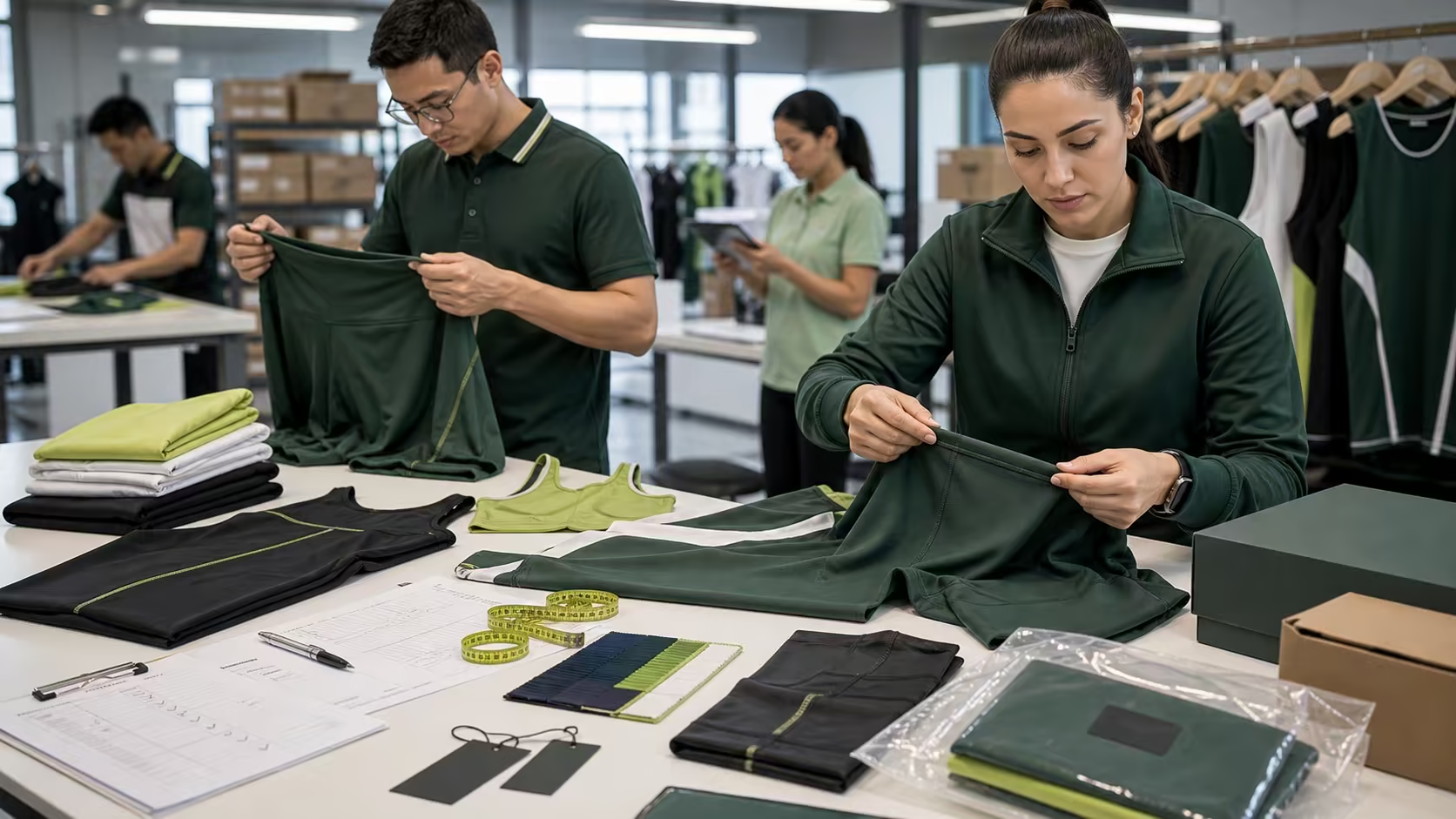
Garment wash-test planning
Control the specimen, care procedure, before-and-after measurements, cycle gates, appearance checks, acceptance criteria, and production scope—before a casual wash check becomes an avoidable fit problem.
Direct answer
Identify the exact fabric or garment, record its condition and measurement method, select a washing-and-drying procedure that matches the test purpose, define cycle and inspection gates, measure the same directions and landmarks afterward, review twist and appearance, and compare the result with criteria written before testing.
Do not reduce the result to “washed three times” or one unsupported shrinkage percentage. Direction, care route, sample identity, size, color, material lot, construction, and acceptance scope all affect what the result can authorize.
Why informal checks fail
Reddit discussions among clothing founders repeatedly connect disappointing first runs with fabric behavior after washing, but those comments do not establish a test method or a universal limit. The production decision needs traceable evidence.
A loose fabric cutting, development sample, pre-production garment, and bulk unit answer different questions. Record style, size, color, fabric and trim codes, lot, revision, and sample stage.
Machine type, wash program, temperature, detergent, ballast, drying route, and number of cycles must be identified. A different drying method can produce a different decision.
Length, width, rise, inseam, sleeve, waistband, and other points need stable landmarks, garment preparation, orientation, tools, conditioning, and repeated-measurement rules.
A passing base-size sample does not automatically release every size, color, material lot, finish, decoration, care instruction, reorder, or future supplier substitution.
Seven-step workflow
The test plan should make a pass, hold, investigation, correction, retest, or approved exception possible without rewriting the rules after seeing the result.
State whether the test selects a material, validates a development sample, supports a care instruction, approves a pre-production garment, checks a change, or confirms a named bulk lot. Set direction-specific dimensional and appearance criteria before testing.
Record the project, style, size, colorway, fabric and trim codes, lot, finish, construction revision, sample ID, production stage, and any prewash or conditioning history. Photograph the same views before and after.
Use a defined preparation, marking, conditioning, orientation, point-of-measure diagram, tool, operator rule, and unit. Keep original readings; do not overwrite them with the after-care result.
Name the selected standard or buyer method, machine type, program, temperature, detergent, ballast, drying method, cycle count, and intermediate inspection gates. Align the test purpose with the intended care route and current label review.
Repeat the defined measurements after the specified preparation and conditioning. Record lengthwise and widthwise change separately, plus product-specific points such as body length, waistband, rise, inseam, sleeve, opening, or panel position.
Check seam or panel twist, skew, puckering, edge rolling, elastic behavior, shape, component damage, surface, color, and overall appearance where they belong to the approved scope. Route print durability to its own decoration test.
Link every failure to the affected material, size, color, lot, construction, process, or care route. Record containment, corrective action, retest identity, approver, exception, and the exact scope released for bulk or reorder.
Test matrix
One result should not silently answer a broader question than the specimen and procedure support.
| Question | Useful specimen | Decision boundary |
|---|---|---|
| Which fabric or finish route should proceed? | Identified fabric specimens from candidate constructions, finishes, colors, or lots. | Material screening only; it does not approve garment fit, seams, elastics, trims, or labels. |
| Does construction remain balanced after care? | Development garment with current panels, seams, bindings, elastic, and trim directions. | Development learning; open fit, material, artwork, and production variables remain visible. |
| Can the production specification be released? | Identified pre-production garment using production-intent materials, construction, finish, decoration, labels, and care route. | Only the recorded style, revision, size-color-lot scope, method, and criteria are covered. |
| Did bulk remain within the approved route? | Traceable finished units selected from the named lot under the agreed quality plan. | Lot evidence; define sampling, disposition, reinspection, and release authority separately. |
| Will every customer get the same outcome? | No single laboratory or controlled sample can represent every household machine, detergent, load, care deviation, wearer, or product history. | Claims and care wording must stay within the supported method and market review. |
Acceptance decisions
Define what matters to fit, construction, labeling, and repeat production before results exist.
Record each controlled length and width dimension. Shrinkage and growth can have different consequences at body length, chest, rise, inseam, sleeve, waistband, and openings.
Compare the post-care garment with the approved measurement and fit basis. Do not hide care-related change inside an unrelated manufacturing tolerance.
A garment may meet selected dimensions yet fail because seams rotate, panels skew, edges roll, elastics distort, components damage, or overall appearance changes.
State whether approval covers one specimen, material lot, size, colorway, production lot, care route, or reorder. Changes require an explicit bridging or retest decision.
Current primary references
ISO 3759:2011, confirmed current in 2022, covers preparation, marking, and measurement for dimensional-change tests. ISO 5077:2007, also confirmed current in 2022, covers determination of dimensional change after specified washing and drying. ISO 6330:2021 specifies domestic washing and drying procedures and notes that machine, detergent, and dryer parameters can affect results. AATCC lists current 2025 methods for fabric dimensional change, garment dimensional change, skew, and seam twist. Select the method, variants, laboratory competence, criteria, and interpretation appropriate to the product and destination; this article does not reproduce a proprietary procedure.
Free test register
The CSV connects the specimen and production revision to measurement points, the complete care procedure, cycle gates, before-and-after results, twist and appearance observations, criteria, failures, corrective action, retest, approval, and released scope. Delete the illustrative row before live use.
Separation of intent
FAQ
There is no universal percentage for every fiber, construction, finish, garment, size, care route, market, or fit requirement. Define direction- and measurement-specific criteria from the product, care instruction, customer or market requirement, approved size and fit basis, selected method, and qualified technical review before testing.
They answer different questions. Fabric testing helps compare identified material and finish routes. Finished-garment testing captures the interaction of panels, grain or knit direction, seams, bindings, elastics, trims, construction, decoration, and care. Use the specimen that matches the decision, and do not treat a fabric pass as garment approval.
Do not choose an arbitrary universal count. Set the procedure, cycle gates, and final cycle count from the intended care route, product risk, buyer specification, claim or label purpose, destination requirements, selected standard, and agreed acceptance plan. Record intermediate findings without changing the prewritten criteria.
No. “Preshrunk” alone does not identify the material lot, process, method, result, garment construction, drying route, tolerance, or released scope. Request the applicable evidence and test the production-intent configuration against the agreed requirement.
State the measurement basis explicitly. The tech pack, sample record, tolerance table, care instruction, and customer-facing size information should not rely on conflicting assumptions. If post-care dimensions matter to fit approval, define the care state, preparation, measurement method, and authorized result.
Preparing a production-intent wash test?
Current test method, sample scope, laboratory, acceptance limits, cost, timing, and release authority must be confirmed for the exact project.