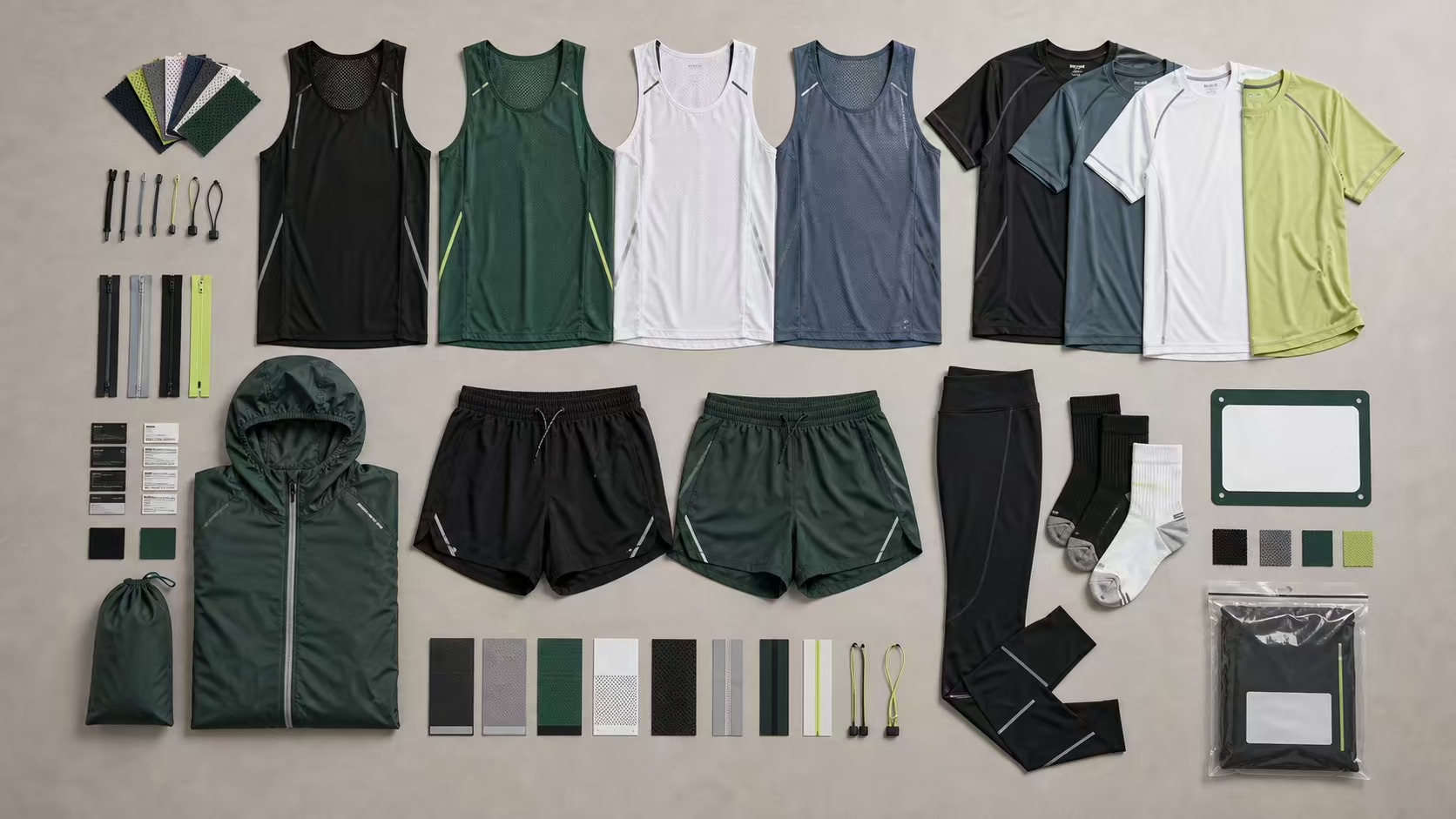
Running apparel product validation
How to Test Running Shorts for Chafing, Ride-Up, Heat, and Pocket Bounce
Do not approve running shorts from a standing try-on. Test the shell, liner, seams, inseam, waistband, pockets, carried items, weather, distance, and wearer together under the conditions the product is meant to serve.
Direct answer
No liner type or inseam can guarantee zero chafing for every runner
A practical running-shorts test compares the actual shell and liner route on representative wearers, during relevant movement, duration, weather, moisture, and carried-load conditions. Record where ride-up, rubbing, pressure, heat, saturation, bounce, or repeated adjustment begins.
Release rule: approve only the tested product configuration and clearly state the limits. One dry treadmill test without a phone does not prove a long, humid outdoor run with a loaded pocket.
Product route
Choose lined or unlined by the intended use—not by trend
Each route changes coverage, heat, laundry, support, pocket integration, and how many moving layers can rub against the wearer.
| Route | Product question | Wear-test focus | Common unresolved risk |
|---|---|---|---|
| Brief liner | Can a low-coverage liner provide the intended support and freedom without edge or seam irritation? | Leg opening, elastic, seam position, sweat, support, and longer-duration contact. | Localized rubbing, wedging, insufficient thigh coverage, or wet cling. |
| Compression liner | Does the liner remain stable and breathable while supporting a pocket or reducing skin-on-skin contact? | Liner length, hem grip, ride-up, pressure, heat, recovery, loaded pocket, and shell overlap. | Too short, too tight, too hot, exposed below shell, or pulled down by a phone. |
| Unlined shell | Does the buyer intend a separate base layer, and can the shell work across those combinations? | Shell ride-up, seam and edge contact, transparency, waistband, pocket load, and compatibility with underwear or tights. | Undefined next-to-skin layer produces inconsistent fit and chafing results. |
| Half tight or bike-short route | Can a close fit deliver stable coverage and storage without excessive heat, pressure, or crotch movement? | Inseam, thigh hem, front and back rise, gusset, pocket, sweat, recovery, and representative sizes. | Leg opening pressure, heat, seam placement, ride-up, or pocket distortion. |
| Two-in-one construction | Do shell and liner move as one product without pulling, twisting, trapping heat, or conflicting in length? | Attachment points, overlap, combined weight, wet behavior, liner recovery, pocket load, and wash. | One layer moves differently and creates bunching, drag, or repeated adjustment. |
Seven-part wear test
Record the condition that creates the failure
“Chafes” and “rides up” are outcomes. A useful development record identifies the garment part, body location, movement, moisture, load, and elapsed time connected to the result.
Lock the sample identity
Record style, sample ID, revision, size, shell fabric, liner route, liner fabric, inseams, wearer, and the active measurement and construction files.
Define the run condition
State indoor or outdoor route, activity, planned duration or distance, pace range, temperature, humidity or rain, and the layer worn under the shorts. Do not compare two samples tested under materially different conditions as if the results were equal.
Map skin-contact and moving edges
Review inner thigh, crotch, groin, waistband, liner opening, labels, drawcord, pocket edge, shell hem, and any seam or reflective trim that can contact skin or another layer.
Measure ride-up and adjustment
Record shell and liner position before and after the run, where bunching begins, whether one side moves more, and how often the wearer pulls, ties, or repositions the garment.
Load every intended pocket
Name the phone, key, card, gel, or flask; record approximate dimensions and weight; then assess access, containment, bounce, sag, pressure, rubbing, waistband drop, and item damage from sweat.
Review heat and moisture behavior
Record saturation, wet cling, perceived heat, drying sequence, transparency, shell-to-liner friction, and whether the garment behaves differently after becoming wet. Avoid unsupported “sweat-proof” or “anti-chafe” claims.
Repeat after wash and across risk sizes
Check elastic, liner recovery, measurements, seams, labels, drawcord, surface, print, and reflective details after the proposed care cycle. Include proportion-sensitive and range-end sizes where liner or pocket behavior may change.
Complaint to evidence
Translate runner feedback into a production decision
| Runner feedback | Product variables to inspect | Evidence to record |
|---|---|---|
| “The liner rides up.” | Liner inseam, thigh opening, stretch and recovery, panel shape, seam, attachment, hem grip, and size. | Starting and ending position, time to movement, route condition, wearer, photos, and required pattern or material change. |
| “The shorts chafe on long runs.” | Contact location, edge, seam, label, moisture, liner coverage, shell movement, carried item, and underlayer. | Elapsed time, weather, distance, skin-contact map, garment state, and whether the issue repeats after the proposed correction. |
| “The compression liner is too hot.” | Layer count, liner fabric, weight, construction, coverage, fit pressure, ventilation, color, and wet behavior. | Controlled comparison under the same activity and weather with wearer comments and moisture observations. |
| “My phone makes the shorts fall down.” | Pocket location, opening, depth, liner support, waistband, drawcord, item weight, bounce, and fabric recovery. | Named phone and case, loaded movement result, waistband displacement, liner sag, access, and containment. |
| “The liner hangs below the shell.” | Shell and liner inseam, rise, attachment, grade rule, stretch, recovery, and intended visual overlap. | Worn position by representative size before movement, after movement, and after wash. |
Free worksheet
Download the running shorts wear-test checklist
The CSV records shell and liner identity, size, wearer, route, duration, weather, carried items, length, movement, chafe-risk location, heat, moisture, pocket load, wash, bulk comparison, evidence, and release status.
- Delete the illustrative row and define product-specific acceptance rules.
- Keep the test limitation visible; a garment result belongs to the recorded condition.
- Use wearer feedback to locate a product question, then verify the change in a controlled repeat test.
Related controls
Connect the wear test to the product specification
FAQ
Running shorts wear-test questions
Are lined or unlined running shorts better for preventing chafing?
Neither route is universally better. Test the intended shell, liner or underlayer, seam layout, inseam, fit, moisture, duration, and wearer together. A route that works for one runner or distance may fail under another body proportion, weather, or load.
How long should a running shorts wear test be?
Long enough to represent the product promise and target use. A short-run product and a marathon product need different evidence. Record when any rubbing, heat, saturation, ride-up, pocket bounce, or adjustment begins instead of reporting only the final pass or fail.
What makes a running-shorts phone pocket secure?
Capacity alone is not enough. Test the named phone and case for containment, access, bounce, liner or shell sag, waistband drop, pressure, rubbing, closure security, and sweat exposure during the intended activity.
Does a longer compression liner always reduce chafing?
No. More thigh coverage may reduce one contact route but can add heat, pressure, wet fabric, hem movement, or visible overlap. Test liner length, opening, fabric, seam, recovery, shell interaction, and wearer proportions together.
Can a brand claim running shorts are anti-chafe?
Use claim wording only within applicable market rules and the evidence you actually hold. A safer product-development record states the tested configuration, wearer scope, activity, duration, weather, carried load, result, and limitations.
Developing running shorts?
Send the runner, distance, climate, liner, inseam, pocket load, and size-range brief.
Include reference products, fabric direction, artwork, reflective details, quantity, target market, packaging, and the failure your sample plan needs to prevent.