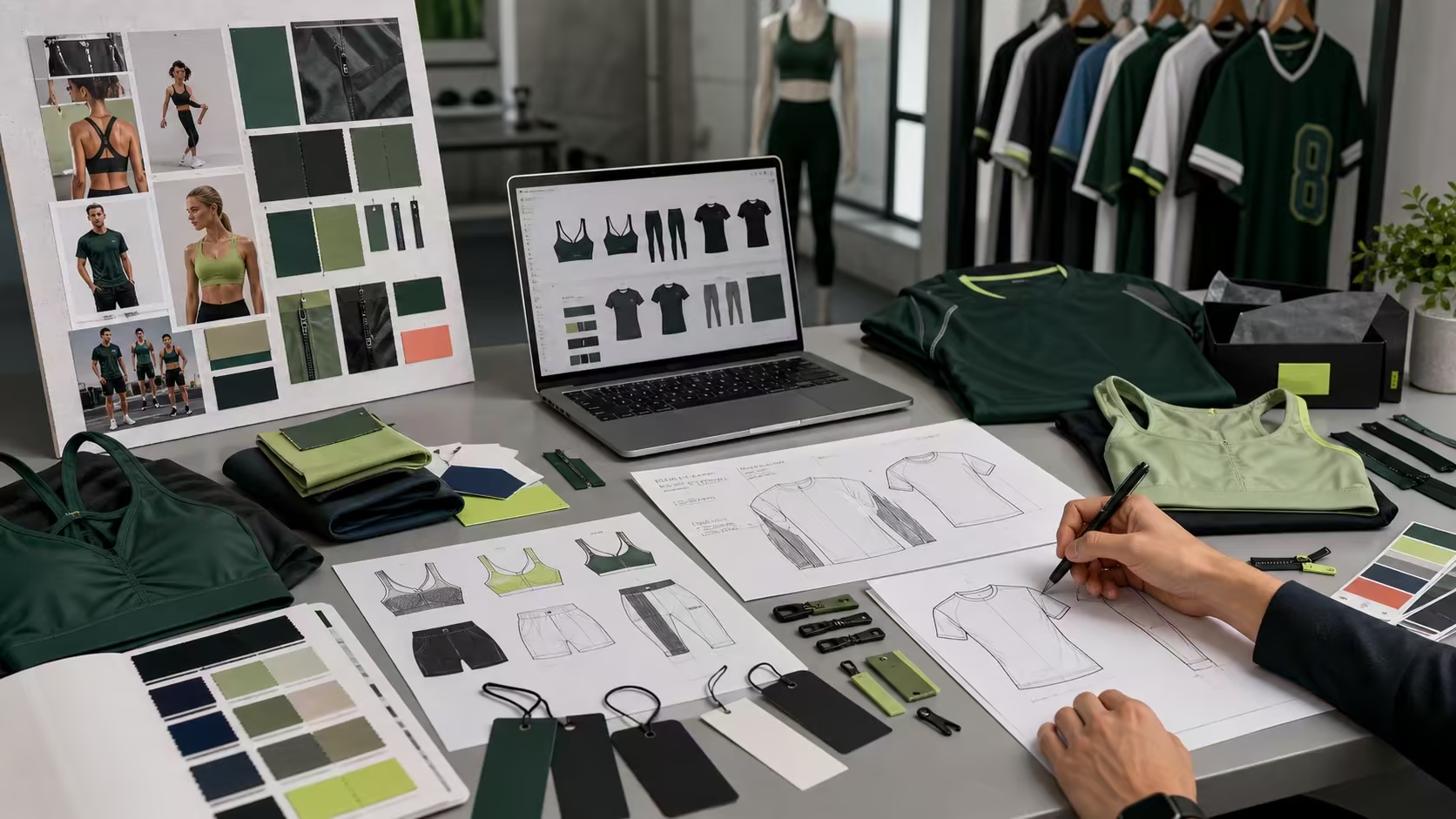
AI-assisted product development
How to Verify an AI-Generated Clothing Tech Pack Before Sampling
AI can help organize a draft, but visual completeness is not production authority. Verify every construction, material, measurement, artwork, label, packaging, claim, and revision against a real source before a factory uses the file.
Direct answer
Treat every AI-generated tech pack as an unverified draft
Before quotation or sampling, a qualified reviewer should confirm that the garment can be constructed, every component has a real specification, points of measure are defined correctly, grade rules are intentional, artwork is production-ready, labels and packaging match the target market, and the active file revision agrees with all approved evidence.
Source rule: if a generated value cannot be traced to a buyer decision, approved sample, pattern, supplier record, artwork file, physical reference, or applicable requirement, keep it open. Plausible wording is not proof.
Verification matrix
Check what AI may organize but cannot approve
The issue is not whether a tool uses AI. The issue is whether each production instruction is correct, manufacturable, traceable, and controlled through later revisions.
| Tech-pack area | Generated output may look complete | Human verification required | Evidence |
|---|---|---|---|
| Technical views | Front, back, and detail drawings are present. | Panels, seams, openings, internal layers, edge finishes, attachment points, and views agree. | Approved design, reference sample, annotated construction drawing, and technical review. |
| Construction | Seam and stitch names appear in callouts. | The route is physically buildable with suitable seam, stitch, allowance, reinforcement, machinery, and assembly order. | Technical designer and manufacturer review plus resulting sample. |
| Bill of materials | A table contains plausible fabric and trim descriptions. | Every material, lining, elastic, zipper, pad, cord, thread, label, and pack component has a real code, role, color, source, and approved reference. | Supplier data, coded swatch, trim card, BOM revision, and physical sample. |
| Measurements | A size chart contains complete-looking numbers. | Each point has the correct location, method, unit, base value, tolerance, grade rule, pattern relationship, and product-specific fit intent. | Pattern, POM diagram, approved base fit, measured sample, and grader review. |
| Artwork | Logos and graphics appear at attractive scale. | Rights, vector source, filename, method, substrate, finished dimension, coordinates, color, feasibility, and physical result are controlled. | Production artwork, placement sheet, color reference, rights record, and strike-off or sample. |
| Claims and compliance | Performance, recycled, certified, protective, or market-ready language sounds credible. | Applicability, label text, test method, report scope, certificate holder, market, user, and claim evidence are verified by qualified parties. | Applicable standards, reports, certificates, declarations, label review, and retained evidence. |
Ten-step preflight
Verify the file before the factory prices or cuts it
Run the same check after any material, pattern, artwork, sample, label, packaging, or market change that affects the controlled specification.
Mark the generated file as a draft
Give it a style code, owner, date, draft revision, intended use, and visible “not released for production” status. Remove or archive superseded drafts so an attractive old PDF cannot re-enter the workflow.
Build a source map
For every material, measurement, color, artwork, label statement, packing rule, and performance requirement, identify the buyer decision or evidence that supports it. Convert unsupported values into open questions.
Review manufacturable construction
Check panels, grain or stretch direction, seam joins, allowances, stitch types, hems, edge finishes, linings, reinforcement, pocket bags, closures, labels, and assembly access. A rendered garment can hide impossible or missing construction.
Reconcile the bill of materials
Connect every callout and visible component to one coded BOM row. Verify composition, construction, weight, finish, stretch, color, width, supplier reference, placement, consumption assumptions, and approved substitute rules.
Rebuild the measurement logic
Confirm each POM on the actual product, define the measurement method, verify the base-size value and tolerance, and review grade increments with a pattern specialist. Do not accept a complete-looking size table without fit evidence.
Preflight color and artwork
Use real production files. Verify scale, finished dimensions, placement coordinates, substrate, method, minimum line or gap needs, color references, print repeat, orientation, and the physical approval route.
Review labels, packaging, and market inputs
Confirm care and fiber text, country-of-origin route, size label, brand label, warnings, language, hangtag, barcode, folding, polybag or box, SKU sticker, inserts, cartons, and destination requirements.
Remove unsupported claims
Do not let generated copy create an unverified performance, sustainability, safety, certification, compliance, material, or factory statement. Link every retained claim to applicable evidence and scope.
Ask the factory to return assumptions
Require focused questions and a written assumption list. A manufacturer suggestion becomes an instruction only after the buyer and qualified owners review, record, and approve it.
Update the file after every sample
Convert feedback into a location, current value, required value, evidence, owner, decision, and revision. Issue one current package in which drawing, BOM, measurement, artwork, label, packaging, purchase order, and sample ID agree.
Failure patterns
Visual polish can hide production ambiguity
| Failure pattern | Why it matters | Controlled correction |
|---|---|---|
| A seam is visible in one view but missing in another | The pattern, BOM, stitch plan, cost, and sample interpretation can diverge. | Resolve the intended construction and update every affected view, callout, pattern, and BOM row. |
| Fabric values were generated from a product image | An image cannot prove composition, knit, weight, stretch, recovery, finish, source, or bulk identity. | Replace with a coded physical swatch and verified supplier specification. |
| Measurements were filled without a pattern or fit block | Numbers may conflict with the shape, construction, size range, wearer, or each other. | Have a pattern and fit reviewer establish the POM method, base measurements, tolerances, and grade logic. |
| Artwork is embedded as a low-resolution image | Scale, color, edge quality, placement, and production method remain uncontrolled. | Release a separate production source file and repeat its filename, method, dimension, coordinates, and color in the tech pack. |
| The first sample changed but the PDF did not | Later samples and bulk may follow old measurements, materials, comments, or artwork. | Update the source-of-truth files, revision history, sample label, approval register, and released package together. |
| The file says “approved” because every field is filled | Completeness is not a decision and generated content is not evidence. | Record named owners, evidence, review dates, open issues, accepted deviations, and release authority. |
Free worksheet
Download the AI tech pack verification checklist
The CSV covers source traceability, file control, technical views, construction, BOM, material facts, measurements, grading, fit, color, artwork, labels, compliance, packaging, claims, cross-file consistency, sample feedback, questions, approval, and release status.
- Delete the illustrative row and keep the generated file identified as a draft.
- Assign the right owner; one reviewer should not self-approve every technical and market-specific field.
- Link evidence or leave the decision open. Do not replace an unknown with generated confidence.
Continue verification
Connect the generated draft to real production evidence
FAQ
AI-generated tech pack questions
Can an AI-generated tech pack be sent directly to a clothing manufacturer?
It can be shared as a clearly marked draft for questions, but it should not control quotation, sampling, or production until qualified reviewers verify manufacturable construction, real materials, measurements, grading, artwork, labels, packaging, claims, sources, and revision status.
What is the biggest risk in an AI-generated tech pack?
The most dangerous error is a plausible instruction that is not traceable to a real decision or evidence. It may look complete while conflicting with the design, pattern, material, another page, a later sample, or the intended market.
Can AI create clothing measurements and size grading?
AI may help format provided data, but base measurements and grade rules should come from product-specific pattern, fit, wearer, construction, fabric, and size-range decisions. Verify every POM, method, value, tolerance, increment, and representative size result.
How should AI-generated garment images be used?
Use them as concept references with the limitations stated. Convert the chosen design into consistent technical views, manufacturable construction, real materials, measurements, production artwork, labels, packaging, and controlled approvals.
Who should approve an AI-generated tech pack?
Assign qualified owners for design, technical construction, pattern and fit, materials, artwork, market-specific labels or compliance, packaging, commercial terms, and bulk release. The tool that generated the draft is not the approver.
Have an AI-generated product draft?
Send the file together with the references and decisions it came from.
Include the intended wearer, product use, size range, material direction, artwork, quantity, market, packaging, and the questions that still need technical review.