Focus the customer
Name the activity, wearer, market, channel, price position, climate, movement, coverage, and problem the range is intended to solve.
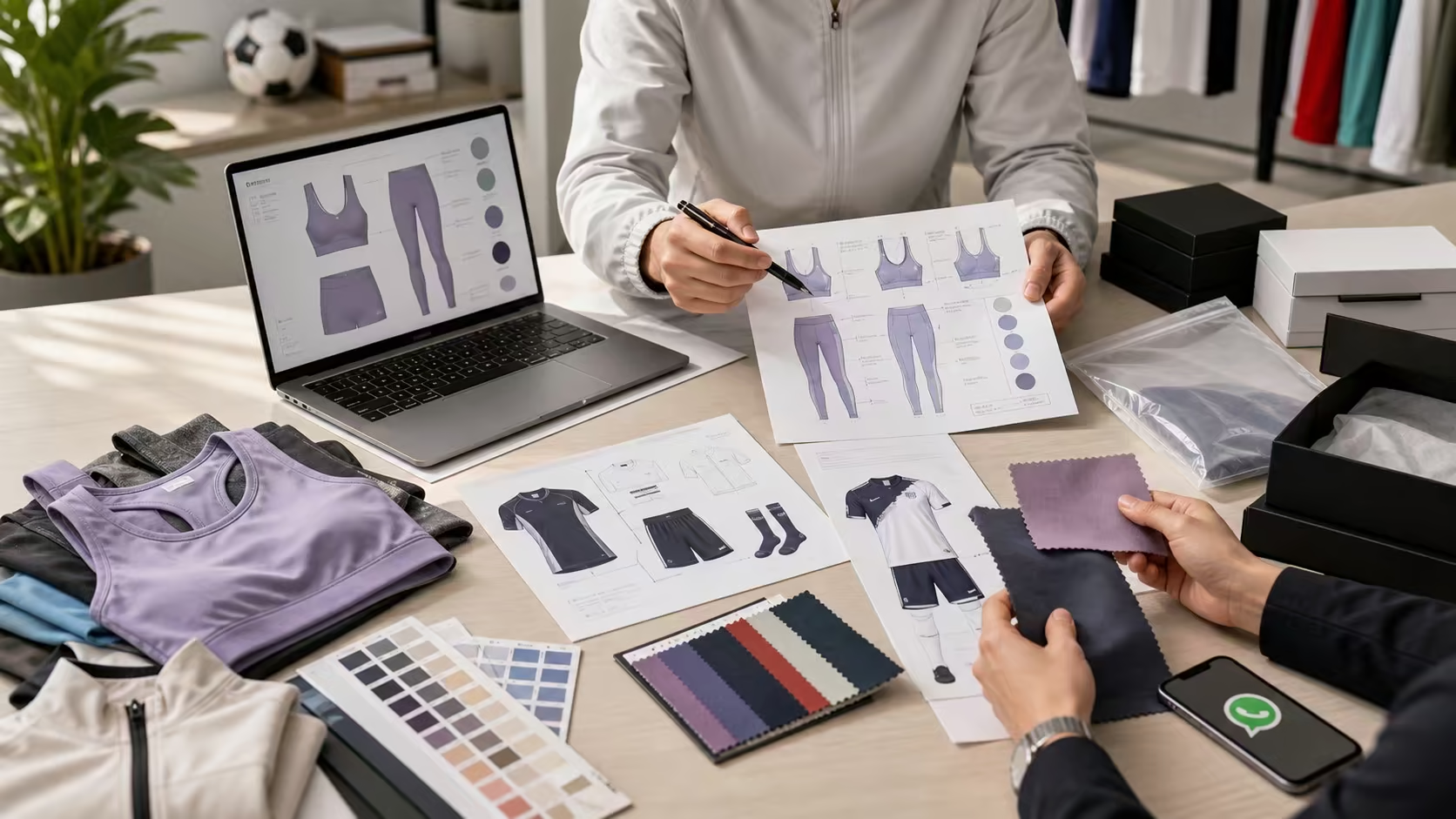
Founder manufacturing guide
Turn a launch idea into a focused range, controlled supplier brief, purposeful sample plan, and repeatable production record.
Direct answer
Start with one defined customer and use case, then build the smallest coherent range that can test your product idea. Choose a development route for each style, state quantity and commercial boundaries, control fabric, fit, construction, branding and packaging, assign a purpose to every sample, define bulk-release evidence, and preserve the approved record for reorders. A supplier can confirm MOQ, price, sample cost and timing only after reviewing that specific scope.
Name the activity, wearer, market, channel, price position, climate, movement, coverage, and problem the range is intended to solve.
Give each style, color, size and material a reason to exist. Added variety can create separate development, minimum, testing, packing, and inventory exposure.
Connect the specification to coded swatches, production artwork, measured samples, wear checks, approved labels, packed samples, and inspection records.
Keep approved references, version history, supplier assumptions, packaging data, and size-level results so a reorder is controlled rather than reconstructed.
Range architecture
A larger assortment is not automatically a stronger launch. Map each product to a customer need, selling role, development risk, shared material strategy, and next-order decision.
| Decision | Record before sourcing | Question the first order should answer |
|---|---|---|
| Target customer | Activity, wearer, size range, climate, use duration, channel, market, price position, and primary complaint or need. | Does the product proposition match the intended wearer in the intended use? |
| Hero style | The product that carries the clearest difference, demand case, fit requirement, and marketing story. | Can the brand deliver its core promise consistently? |
| Supporting styles | The outfit, layering, cross-sell, or use gap each additional product closes. | Does the assortment behave as a collection rather than unrelated samples? |
| Color architecture | Core, seasonal, print, contrast, and carryover colors plus physical color references and material availability. | Which colors justify repeat inventory and which should remain limited? |
| Size architecture | Base size, intended range, fit block, grade logic, size split, representative sample sizes, and channel needs. | Where do fit and demand change across the range? |
| Reorder role | Carryover, test, seasonal, preorder, replacement, or planned-discontinuation status for each SKU. | Which records and components must remain stable for replenishment? |
Development route
Route names vary between suppliers. Define responsibilities and deliverables instead of assuming the label explains what is included.
Useful when a verified existing product, fit, fabric and available color route meet the brief. Confirm product identity, inventory status, branding limits, packing, and replenishment.
Start from an existing base and control selected colors, logos, labels, trims, or packaging. Record which base specifications cannot change and which inputs create new minimums.
Ask the supplier to develop from a commercial or design brief. Define ownership, source files, decision responsibility, sample outputs, revisions, and how the approved result becomes controlled.
Provide production-ready drawings, materials, measurements, construction, artwork, labels, packaging, quality criteria, and revisions. Factory review and physical sampling still remain necessary.
Route comparison
For a fuller responsibility map, use the OEM vs ODM sportswear guide. For small first orders, separate the style, material, color, decoration, label and packaging constraints in the activewear MOQ guide.
Fourteen decisions
These stages are not a fixed calendar. Their dependencies show what must be decided, verified, or left visibly open before the next commitment.
Define customer, use, market, channel, price position, launch goal, delivery country, and the product problem being solved.
Name the hero style and the function of every supporting style. Remove products that add variables without testing a meaningful customer or commercial assumption.
For each style, state whether the project uses a stock base, light customization, ODM support, OEM specifications, or a controlled hybrid.
Plan units by style, color, size and delivery wave. Keep forecast assumptions separate from supplier-confirmed minimums and component commitments.
Record target product cost, currency, delivery term, destination, packaging, testing, duties, freight and other landed-cost components that must be compared.
Connect every material to a code, construction, composition, finished weight, color, stretch direction, recovery, finish, performance need, evidence and approved swatch.
Define wearer, base size, points of measure, methods, tolerances, grade logic, fit sample, representative sizes, movement and wash checks.
Reconcile technical views, panels, seams, stitches, allowances, reinforcements, edges, pockets, closures, linings and assembly access.
Provide rights-cleared source files, method, substrate, final dimensions, coordinates, color references, orientation, filename and physical approval route.
Separate stable brand data from variable SKU, size, barcode and destination data. Define placement, folding, individual packs, inserts, cartons and packed-sample approval.
Name the decisions, evidence, approver and exit rule for development, fit, size-set, pre-production, decoration, packaging or shipment-reference samples.
Connect material, fit, construction, decoration, labels, packing and any performance claim to applicable checks, records, scope and release authority.
Allow for buyer decisions, material availability, sample review, revisions, testing, artwork, labels, packing, production, inspection and transport without treating an estimate as a guarantee.
Retain the approved specification, physical reference, reports, component data, packaging version, supplier assumptions and order results; record every later substitution or change.
Budget structure
No responsible universal startup budget applies to every activewear collection. Build a project-specific view of development, production, launch and leftover commitments.
| Cost area | Inputs to request or estimate | Hidden exposure to identify |
|---|---|---|
| Development | Pattern or base-style work, tech pack review, fabric and trim sourcing, samples, artwork setup, courier, testing, and revision rounds. | Repeated samples caused by unresolved decisions, changed files, new materials, or unapproved substitutions. |
| Production | Units, material yield, color, construction, decoration, labels, packaging, inspection, allowances, and agreed delivery term. | Separate minimums, surcharges, consumption changes, wastage rules, split deliveries, and excluded services. |
| Landing | Freight, insurance, export and import roles, duties, tax, brokerage, destination handling, storage, and fulfillment preparation. | A delivery label such as FOB or DDP without the exact named place, role split, quote validity, and exclusions. |
| Inventory | Size and color depth, launch allocation, returns, replacements, photography samples, campaign stock, and reorder buffer. | Unsold packaging, labels or components that cannot follow a product, legal, barcode, address, color, or season change. |
Release gates
| Gate | Minimum controlled record | Do not infer |
|---|---|---|
| Request quote | Product scope, quantities, size range, route, material direction, artwork, packaging, market, destination, timing need and open questions. | That an advertised MOQ, price or lead time applies to your colors, files and components. |
| Start sampling | Current brief or tech pack, coded material direction, measurement method, production artwork status, sample purpose, acceptance questions and revision ID. | That a concept image or complete-looking document is manufacturable and internally consistent. |
| Approve bulk | Approved sample and specification, resolved comments, material and color references, decoration result, labels, packaging, quality plan, accepted deviations and named release authority. | That approval of appearance also approves measurements, care behavior, claims, packaging or all sizes and colors. |
| Release shipment | Order and carton reconciliation, inspection evidence, corrective-action status, documents, delivery handoff, retained samples and authorized disposition. | That one photo, video call or inspection guarantees every unit or removes buyer responsibilities. |
| Place reorder | Original approved records, order results, changes, current material and component availability, updated market needs and new approval scope. | That the same name or old sample proves an unchanged material, process, color, label, price or timeline. |
Free collection planner
The CSV separates buyer inputs, supplier answers, evidence, owners, dates, open questions, status, and approvals across commercial brief, range, route, quantities, cost, materials, fit, construction, branding, packaging, samples, quality, timing, and reorders.
Continue planning
FAQ
Prepare the target customer and use, product references or technical files, styles, colors, size range, quantity assumptions, target market, fabric and performance priorities, artwork, labels, packaging, delivery country, timing need, budget boundary, and open questions. Mark estimates clearly so the supplier can return assumptions.
There is no universal number. A smaller coherent range usually reduces simultaneous fit, fabric, color, artwork, minimum, sample, packaging, inventory, and launch variables. Keep a style when it serves a defined customer or commercial role and the project can fund and verify its full commitment.
Choose by the inputs you control and the development support you need. Existing or light-custom bases can reduce new decisions, ODM assigns more development work to the supplier, and OEM follows a buyer-controlled specification. A hybrid route can assign a different model to each style, but responsibilities and deliverables must be written.
A full tech pack is strongest when the buyer controls the design and expects repeatable custom production. An early ODM or light-custom project may begin with a structured brief, but the approved product still needs a controlled record covering materials, measurements, construction, artwork, labels, packaging, quality criteria, revisions, and physical references before bulk.
A supplier can give a reliable project-specific answer after reviewing the actual styles, quantities, colors, size split, materials, construction, decoration, labels, packaging, quality or testing scope, delivery term, destination, files, approval route, and current availability. Treat earlier website figures or ranges as planning context, not a fixed quotation.
Planning a first collection?
Unknowns can remain open. A structured brief helps separate feasible routes, required evidence, supplier assumptions, and the next sample decision.