Separate seam from stitch
The seam describes how material parts are arranged and joined; the stitch describes the interlacing or looping structure used to form the join or finish.
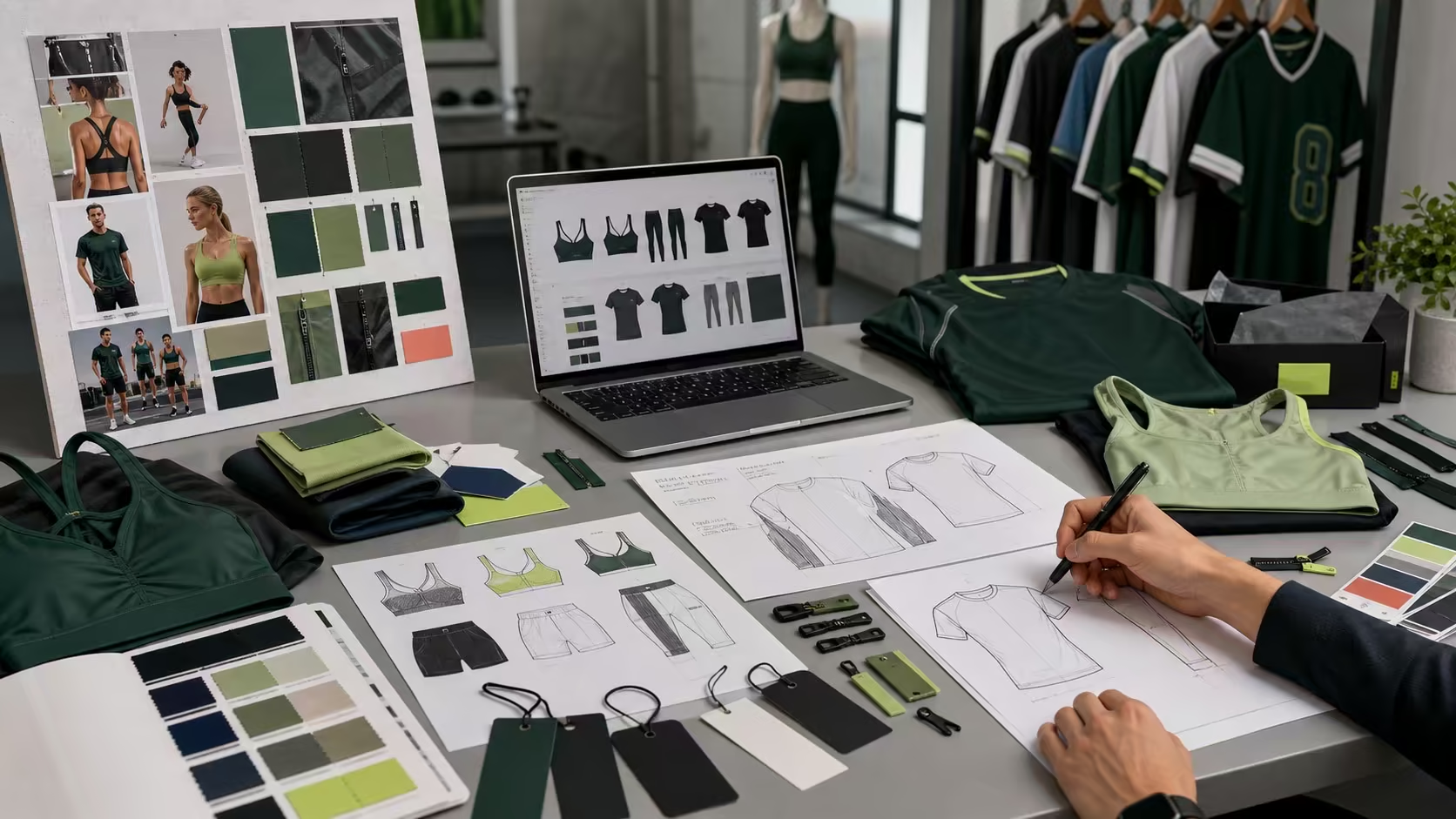
Technical construction guide
Translate flatlock, coverstitch, overlock, binding, elastic attachment, and reinforcement ideas into controlled tech-pack callouts and verifiable samples.
Direct answer
Specify the garment area and seam purpose, material code and stretch direction, seam type, stitch reference, thread, needle, density method, seam allowance, reinforcement, finish, body-contact requirement, sample check, test or wear condition, acceptance rule, approved sample ID, and bulk verification point. Flatlock, coverstitch, and overlock describe different constructions or operations and should not be used as interchangeable appearance labels.
The seam describes how material parts are arranged and joined; the stitch describes the interlacing or looping structure used to form the join or finish.
State whether the operation joins panels, finishes an edge, attaches elastic, secures a pocket, controls bulk, reinforces stress, or manages next-to-skin comfort.
Evaluate stretch direction, recovery, thickness, surface, perforation risk, edge behavior, elastic interaction, thread and intended wearing condition together.
Use a dated sample and written check for appearance, extension, recovery, strength where applicable, comfort, wash, movement, and production repeatability.
Construction vocabulary
Machine names, local trade terms, visual references, and stitch terminology can differ. Pair the written reference with a cross-section or callout, material assembly, and approved physical result.
| Term | What it helps describe | What it does not prove by itself |
|---|---|---|
| Seam type | The arrangement and relationship of the material plies or edges in the stitched assembly. | The exact stitch, thread, density, allowance, elasticity, comfort, strength, or finished appearance. |
| Stitch type or class | How threads interlace, interloop or intraloop to form a stitch structure. | The complete seam assembly, machine settings, material response, or suitability for a product location. |
| Overlock or serging | An edge-neatening or joining route commonly associated with looped stitches that wrap a cut edge. | A universal activewear join, a flat seam, or guaranteed extension and recovery on every fabric. |
| Coverstitch | A stitch route commonly used for hems, elastic or binding operations, with needle threads visible on one side and cover or looper formation on the other. | The number of needles, cover configuration, seam purpose, thread, density, tension, stretch or approved appearance. |
| Flatlock or flatseam | A family of relatively low-profile joining constructions often considered for stretch garments and skin-contact zones. | That two suppliers mean the same seam, stitch class, width, security, coverage, feel, or strength. |
| Decorative topstitch | A visible row or group of stitches used for appearance, stabilization, edge control, attachment, or reinforcement. | That it carries structural load or replaces a specified joining seam. |
Tech-pack callout
A stitch number alone is rarely a complete manufacturing instruction. Connect the operation to material, location, equipment feasibility, sample evidence, and an acceptance rule.
| Field | What to record | Why it matters |
|---|---|---|
| Location and purpose | Style code, revision, garment area, join or finish purpose, load direction, skin-contact zone, visibility, and intended use. | The same stitch can behave differently at a hem, waistband, crotch, pocket, neck, armhole, or elastic attachment. |
| Material assembly | Fabric and trim codes, ply order, face and reverse, stretch direction, nap or print direction, lining, elastic, binding, tape, and allowance. | Controls the actual components and orientation being joined rather than an isolated stitch sample. |
| Seam and stitch | Seam reference, stitch type or class, row count, needle arrangement, visible side, finished width, edge finish, and a clear diagram where needed. | Reduces ambiguity created by local machine names or visual shorthand. |
| Thread and needle | Thread type, construction, size, color, source or code, needle system, size, point, and approved substitutes. | Affects seam extension, strength, bulk, abrasion, appearance, needle damage and reproducibility. |
| Process settings | Density measurement method, tension or differential-feed reference where controlled, folder or guide, seam allowance, trimming, reinforcement, start and finish security. | Turns a named operation into a repeatable production target while allowing qualified machine setup. |
| Approval | Sample ID, photo or construction reference, measured result, movement or wash condition, comfort review, failure description, approver, date, acceptance rule, and deviation status. | Connects the instruction to the physical result the buyer and supplier accepted. |
| Bulk control | Incoming material identity, first-output comparison, in-line frequency, final inspection point, defect examples, escalation, retained reference, and release authority. | Prevents a passed development sample from becoming an unmonitored bulk assumption. |
Product decision matrix
This matrix identifies questions to close; it is not a universal stitch prescription. Final selection depends on the actual material assembly, equipment, fit, wearer, care, evidence and supplier review.
| Product or area | Construction priorities | Sample verification |
|---|---|---|
| Leggings: inseam and rise | Repeated multidirectional extension, seam profile, opacity interaction, bulk at intersections, recovery, thread feel, and high skin contact. | Squat, bend, lunge, seated movement, extended wear, seam extension, surface feel, wash, recovery, and stress-point review. |
| Leggings: waistband | Elastic or self-fabric attachment, stretch balance, joining bulk, top-edge recovery, hidden pocket, vertical seams, and topstitch behavior. | Donning, waist movement, rolling or folding, pocket load, recovery, seam grin, skipped stitches, wash, and size comparison. |
| Sports bra: band and straps | Elastic attachment, edge coverage, pressure, recovery, cup or lining layers, thickness transitions, adjustment hardware, and skin comfort. | Donning, activity by support intent, strap and underband pressure, edge abrasion, stretch, wash, and representative-size wear checks. |
| Running shorts: liner and hem | Low-profile skin contact, liner extension, edge finish, shell-to-liner attachment, curved openings, pocket load, and moisture condition. | Repeated stride, long-duration wear, wet condition, chafing observations, ride-up, hem recovery, pocket bounce, and wash. |
| Compression layers | Controlled extension, close fit, low profile, seam security, anatomical panel joins, heat and moisture condition, and edge pressure. | Donning, full movement range, prolonged skin contact, seam extension, recovery, wash, appearance, and agreed performance checks. |
| Sublimated teamwear panels | Print alignment, color at extension, ventilation panels, underarm or side joins, abrasion zones, number areas, and seam allowance interaction. | Full-size printed sample, alignment across joins, movement, stretch color, wash, roster artwork, and match-use contact points. |
| Hoodies and active layers | Heavier fabric bulk, pocket and hood attachment, rib recovery, shoulder reinforcement, zipper or binding interaction, and surface appearance. | Layered fit, pocket load, zipper operation, hood balance, seam bulk, twisting, wash, rib recovery, and surface change. |
Development workflow
Mark joins, hems, openings, edges, elastic, bindings, pockets, closures, labels, reinforcements, intersections, high-load zones, and skin-contact areas on consistent technical views.
State the load, stretch, recovery, profile, comfort, appearance, coverage, drainage, ventilation, abrasion, security, and repair requirements for each location.
Use coded face, lining, mesh, elastic, binding, tape and thread references with orientation and approved alternatives. Do not choose a seam from a generic fabric description.
Ask the technical designer and manufacturer to return the seam, stitch, thread, needle, equipment, allowance, reinforcement, expected result, limitations, and any conflicting callout.
Where risk is high, test the actual material assembly and operation before or within a complete garment. Mark the sample ID and settings or inputs that must remain controlled.
Combine visual inspection with relevant extension, recovery, wash, movement, skin-contact, load, and product-specific wear conditions. A flat table review cannot reproduce every activewear demand.
Distinguish thread break, skipped stitch, seam opening, slippage, fabric rupture, needle damage, waviness, tunneling, bulk, edge exposure, abrasion, unraveling, or appearance mismatch.
Update drawings, callouts, BOM, construction table, measurements where affected, sample comments, acceptance rules, approved sample ID, deviation log, and release authority together.
Compare setup and first output with the approved reference, inspect risk operations in line, retain defect examples, and connect final release to the order and current specification.
Failure diagnosis
| Observed issue | Inputs to investigate | Evidence to preserve |
|---|---|---|
| Stitches pop during stretch | Material extension, seam orientation, stitch formation, thread extension and size, density, tension, allowance, needle damage, reinforcement, fit and movement load. | Exact location, size, color, fabric lot, sample revision, movement condition, failure mode, before-and-after images, and affected units. |
| Seam waves or tunnels | Feed balance, tension, density, thread, differential behavior, fabric recovery, edge handling, folders, pressing, moisture, and relaxation. | Flat and worn appearance, measurement condition, production time, machine or line reference, fabric identity, and comparison to approved sample. |
| Skipped or damaged stitches | Needle system, size and point, needle condition, thread path, timing, fabric layers, coatings, elastic, speed, operator handling, and local thickness transition. | Close images from both sides, defect sequence, material assembly, needle and thread references, machine setup, and corrective trial. |
| Skin irritation or chafing | Seam profile, placement, exposed thread or edge, stiffness, tension, perspiration, garment movement, fit pressure, duration, labels, and adjacent trim. | Wearer and size, activity, time, climate, moisture condition, body location, garment revision, care history, and comparative sample. |
| Seam opens or fabric fails | Failure in thread, stitch, seam, allowance or fabric; load direction; material strength; slippage; cuts; needle damage; density; reinforcement; and intended use. | Uncut failed specimen, failure location, load or wear condition, lot, sample ID, dimensions, photos, test report where applicable, and disposition. |
| Bulk differs from sample | Material or thread substitution, color or lot, machine configuration, settings, allowance, operator method, folder, trimming, pressing, inspection and uncontrolled file revision. | Sealed reference, released specification, bulk first output, material labels, setup records, deviation approval, affected quantity, and corrective action. |
Technical references
The links below support terminology and test planning. They do not select a universal seam for a product, replace the complete publication, prove a supplier capability, or approve a finished garment.
Scope limitation
ASTM D1683/D1683M-22 is scoped to woven fabrics and states that it does not predict actual seam wear performance. Many fitted activewear products use knits. A qualified laboratory, technical team and buyer should agree applicable methods, specimens, conditioning, directions, care states, sample sizes, acceptance rules and product wear checks before relying on a result.
Free specification worksheet
The CSV connects style and area to purpose, body contact, fabric, stretch direction, seam, stitch, thread, needle, density method, allowance, reinforcement, sample evidence, test condition, acceptance, approved sample, bulk check, owner and status.
Continue development
FAQ
Flatlock or flatseam commonly refers to a relatively low-profile joining construction, while coverstitch commonly refers to stitch formations used for operations such as hems, bindings, or elastic attachment. Supplier terminology can vary, so specify seam purpose, material arrangement, stitch reference, visible sides, width, thread, and an approved sample instead of relying on the name alone.
There is no universal best seam. The choice depends on garment area, function, load direction, material and trim assembly, stretch and recovery, fit, skin contact, thickness, appearance, equipment, thread, needle, care, test evidence, wear condition, repair needs, and production control.
For each location, record purpose, material codes and orientation, seam type, stitch reference, row or needle arrangement, thread, needle, density measurement method, allowance, reinforcement, finish, diagram, approved sample ID, test or wear condition, acceptance rule, and bulk inspection point.
Possible causes include a mismatch between fabric behavior and seam system, fit or load, stitch formation, thread, needle, density, tension, feed, allowance, reinforcement, edge handling, local thickness, operator method, wear condition, or uncontrolled substitution. Record the exact failure and conditions before changing one variable.
Review a representative material assembly or garment for construction accuracy, appearance, extension, recovery, relevant strength or failure behavior, skin comfort, movement, wash, decoration or print interaction, and product-specific use. Release the written revision and approved physical reference together, then compare first output and bulk risk operations against them.
Need a construction review?
Include the size range, fit intent, quantity, target market, sample revision, artwork or print interaction, and the questions that must be answered before approval.